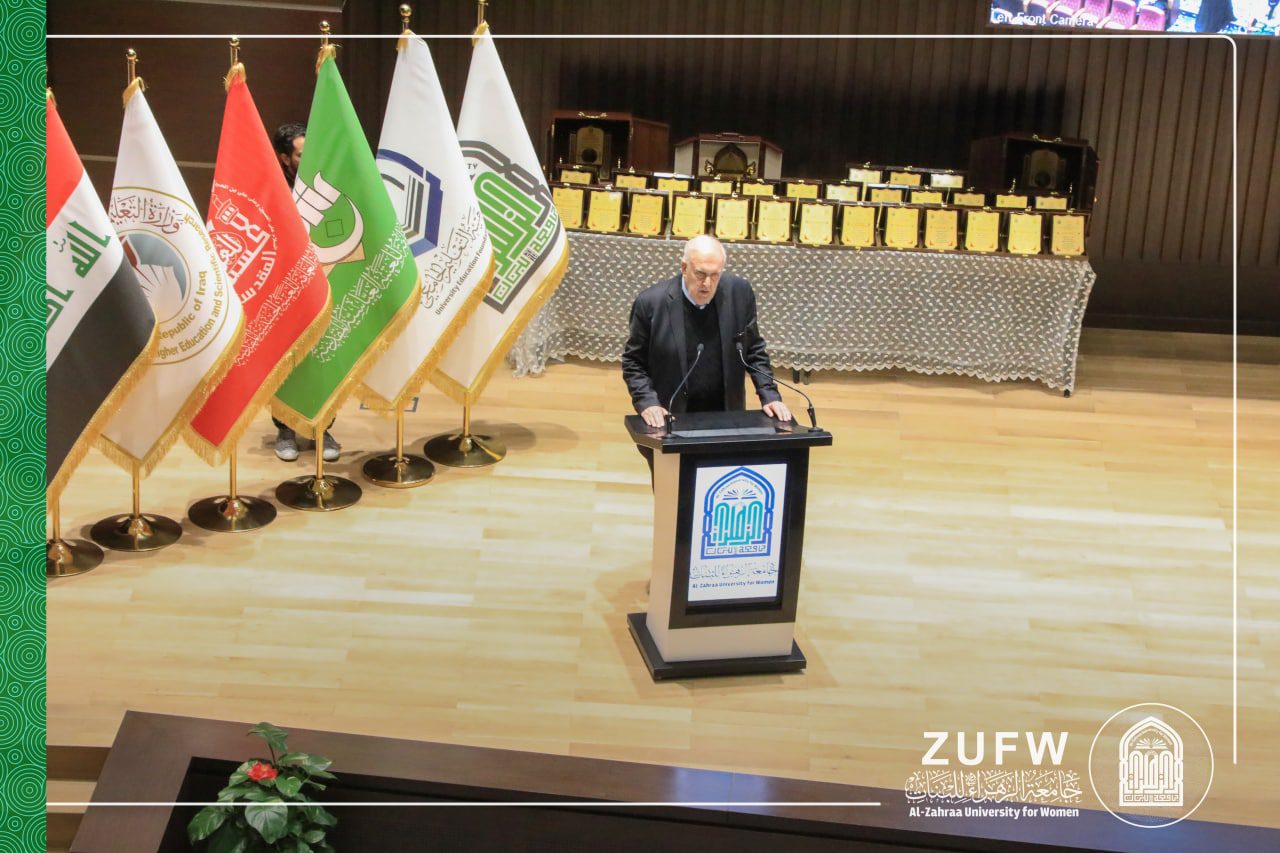
Al-Zahraa University for Women continues to fulfil its scientific and cultural mission across various fields through its commitment to fostering an atmosphere of scholarship and promoting authentic knowledge within academic and specialised institutions, as well as throughout the wider community. Under the leadership of Prof. Dr Zainab Al-Mulla Al-Sultani, President of Al-Zahraa University for Women, the University remains dedicated to promoting the proper functional, literary, and scientific use of the Arabic language, while affirming its significance as a distinctive cultural identity and a fundamental safeguard against intellectual challenges in their various forms.
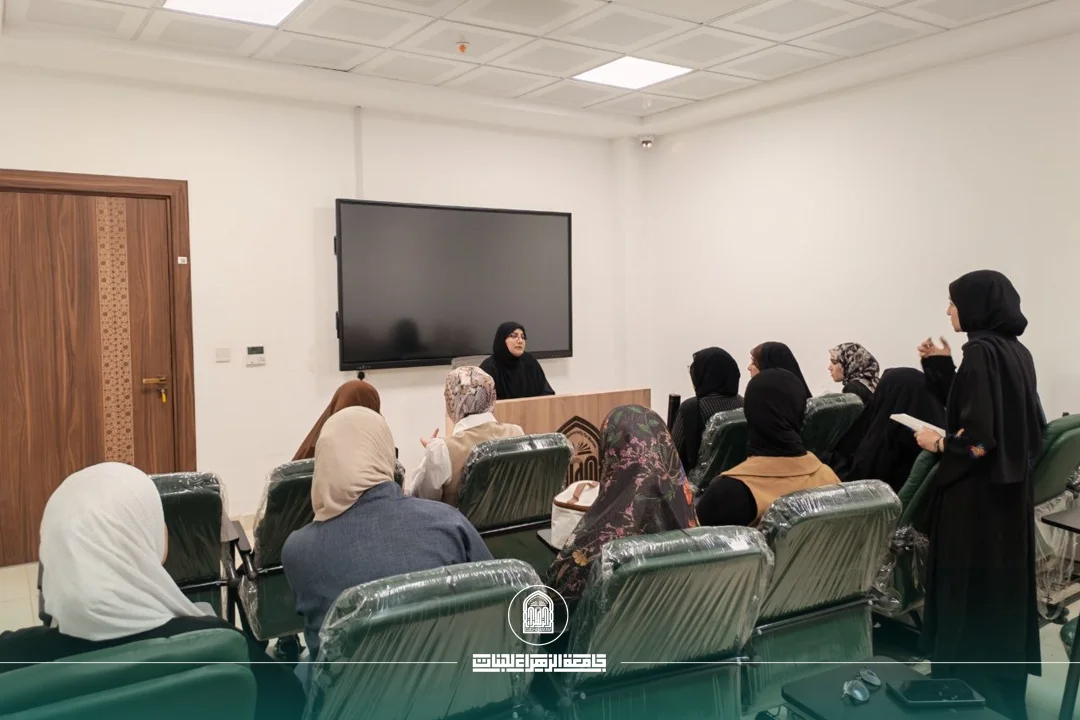
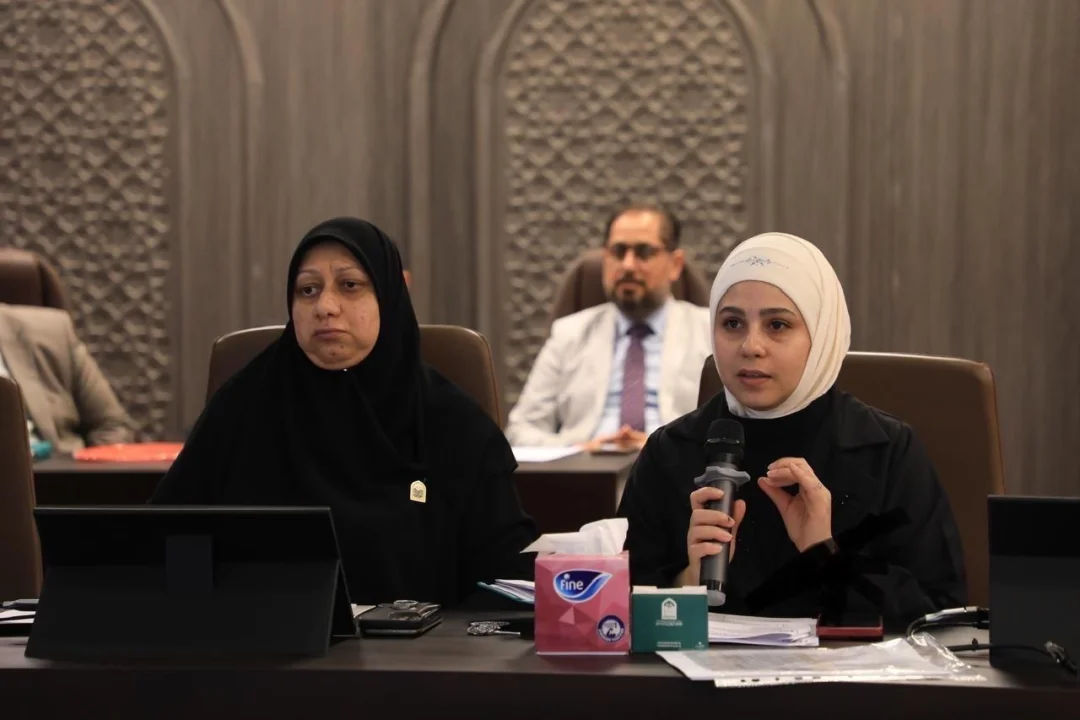
In conjunction with World Arabic Language Day, the Department of Arabic Language at ZUW organised its Fourth Annual Forum to commemorate the occasion. The forum was held on 19–20 December 2022 in Umm Abiha Hall on the University campus under the slogan “Arabic Language between Identity Empowerment and Civilisational Communication.” Additionally, the said event attracted distinguished participation from prominent figures representing various Universities, scientific academies, and specialised centres.
Recognised as the foremost of languages for its eloquence and precision, Arabic was chosen by Almighty Allah as the language of the Holy Qur’an. Accordingly, the forum sought to highlight the significance of the Arabic language, strengthen the sense of belonging to and pride in it, and emphasise its status as one of the most complete and honourable languages. It also aimed to encourage the exchange of scholarly perspectives and generate new visions that contribute to preserving the authenticity of the Arabic language and advancing its future development.
The opening session commenced with the recitation of verses from the Holy Qur’an by Salah Al-Shuraikhani, the muezzin of the Imam Hussein Holy Shrine, followed by the recitation of Surat Al-Fatiha in tribute to the souls of Iraq’s heroic martyrs who sacrificed their lives in defence of the nation and its people against the forces of terrorism and darkness. The Iraqi National Anthem was then performed.
The address of the General Secretariat of the Imam Hussein Holy Shrine was delivered by Dr. Ala' Dia' Al-Din, Deputy Secretary-General of the Imam Hussein Holy Shrine. In his speech, he managed to shed light on the Shrine’s pioneering role in promoting the language of the Holy Qur’an and reinforcing its position within Arab and Islamic societies. He stressed that the Arabic language represents the identity and foundation upon which society is built, noting that the Shrine’s efforts to preserve and strengthen Arabic begin from kindergartens and continue through primary and secondary schools to Universities. He further affirmed that these initiatives aim to safeguard the Arabic language and confront attempts to undermine its authentic identity, which distinguishes it from all other languages.
In her address, Prof. Dr. Al-Sultani, the University President, stated that the fourth edition of the forum represents a renewed commitment to reviving the Arabic language and reminding its speakers of their responsibility towards it. She described the forum as a purposeful message directed to academics, female students in particular, and governmental and societal institutions in general. She emphasised the necessity of preserving the language of the Holy Qur’an and the language of the people of Paradise from attempts at marginalisation, neglect, and cultural displacement. She also addressed the significant cultural challenges facing the Arabic language, particularly those arising through social media platforms, especially Facebook, and the increasing prevalence of colloquial language at the expense of Classical Arabic. She further stressed that preserving Arabic is a shared responsibility, as it embodies the Qur’anic identity honoured by Allah(swt) through making it the language of the Holy Qur’an and the foremost among the languages of the world.
The forum also honoured the Arabic language by hosting an address delivered by Prof. Dr. Mohammed Hussein Al-Yaseen, President of the Iraqi Scientific Academy. In his speech, he emphasised the ancient history of the Arabic language, its Qur’anic and Islamic foundations, and the distinguished status it has enjoyed throughout the centuries. He stressed the importance of preserving its continuity despite the passage of time and the repeated attempts to marginalise and weaken its position. He concluded by affirming that safeguarding this invaluable civilisational heritage is a collective responsibility shared by both individuals and institutions.
A welcoming address was subsequently delivered by Prof. Dr. Iman Bahiyah, Dean of the Faculty of Education, who warmly welcomed Dr. Al-Din; the President of Warith Al-Anbiyaa University; Prof. Dr. Al-Sultani, and Prof. Dr. Al-Yaseen; together with the distinguished guests participating in the celebration marking World Arabic Language Day. She expressed her appreciation for their attendance, noting that their presence added distinction and value to the said event. Quoting the Holy Qur’an, she recited the verse:
“My Lord, inspire me to be grateful for Your favour which You have bestowed upon me and upon my parents, and to do righteousness of which You approve.”
She concluded by welcoming the audience and expressing her hope that the forum would provide valuable academic and intellectual benefits for all participants.
The programme also included an address by Dr. Huda Al-Umaidi, Head of the Department of Arabic Language, who expressed her deep appreciation for the continuous support provided by the University President, the Deanship of the Faculty, and the General Secretariat of the Imam Hussein Holy Shrine. She affirmed the Department’s determination to unite efforts in restoring the prestige of the Arabic language through integrating developmental activities and specialised workshops for female students alongside the academic curriculum, in line with the objectives of the Ministry of Higher Education and Scientific Research and the vision of the Imam Hussein Holy Shrine to produce distinguished graduates both qualitatively and quantitatively.
Dr Al-Umaidi further explained that these efforts fulfil the pledge made by the Department of Arabic Language at ZUW to enrich Iraqi society through highly qualified female graduates specialising in Arabic language and literature. She acknowledged that achieving this goal would not be possible without the continued support of distinguished scholars devoted to the service of the Arabic language.
She also highlighted that one of the greatest challenges facing contemporary society is the widespread lack of linguistic competence. She explained that many social conflicts, misunderstandings, family disputes, and extremist interpretations stem from incorrect language comprehension and misuse. Accordingly, she stressed that mastering the Arabic language and developing effective communication skills constitute fundamental means of addressing many of these societal challenges.
The scientific programme featured numerous research papers and specialised studies on the Arabic language presented by researchers from Iraq and abroad, including Syria, Algeria, and Tunisia, in addition to contributions from Iraqi Universities such as the University of Kufa, the University of Basrah, and the University of Anbar. These studies explored recent linguistic and grammatical developments and presented contemporary scholarly findings for the benefit of researchers and specialists.
The forum also featured the performance of a theatrical production entitled “Its People’s Complaint” (Tashku Ahlaha), written by Dr. Farah Al-Fadhli and directed by Dr. Khalid Kadhim Hameedi. The play was performed by a group of talented female students from the Department of Arabic Language. Blending symbolism with reality, the production portrayed the current state of the Arabic language in light of cultural openness and the challenges confronting Arab identity.
The programme further included the presentation of the anthem “Bid’at Al-Mustafa”, performed by distinguished female students from the Department of Arabic Language. The lyrics and composition were by Abbas Badawi.
At the conclusion of the first day of the forum, Prof. Dr. Al-Sultani delivered a closing address in which she expressed her sincere appreciation to the distinguished academic figures and guests who attended the said event. She also extended her gratitude to everyone who contributed to organising the forum, including the Dean of the Faculty of Education, the Head of the Department of Arabic Language, the Department’s academic and administrative staff, and the female students. The ceremony concluded with the honouring of the guests and participating researchers.
The second day of the Fourth Annual Forum featured a variety of academic and cultural activities, including a specialised research session and an Arabic calligraphy exhibition. The programme welcomed some of the most distinguished Arabic calligraphers from Karbala Governorate and included a scientific lecture on the history of Arabic calligraphy, its principal styles, and the contribution of the School of Ahl Al-Bayt (peace be upon them) to the emergence and development of Arabic script. The activities concluded with the recognition of the staff of the Department of Arabic Language and the female students who participated in the forum.
The forum concluded with a number of significant scientific recommendations, most notably:
1. Emphasising the importance of incorporating the Arabic language into everyday life by encouraging its continuous use, recognising that language represents the nation’s identity, existence, and cultural heritage.
2. Raising awareness of international linguistic research demonstrating that Arabic is among the world’s most resilient languages and is expected to maintain its vitality for generations to come.
3. Introducing Arabic language courses within all non-specialist scientific departments.
4. Encouraging specialised institutions and research centres to continue the Arabisation of scientific disciplines and foreign theories.
5. Expanding workshops and training programmes that enable employees in governmental institutions to use accurate Standard Arabic and sound Arabic expression in official communication.
6. Strengthening coordination among the Departments of Arabic Language across Iraq to establish a unified national programme for celebrating World Arabic Language Day, thereby enabling broader participation and interaction.
It is significant to point out that the Department of Arabic Language at ZUW has concluded numerous cooperation agreements and expanded its academic partnerships with several Universities. The most recent agreement was signed with the University of Milan, aiming to broaden existing memoranda of understanding and further enhance academic and research performance through collaboration with internationally recognised Universities. This agreement forms part and parcel of the University’s broader strategy, through which dozens of national and international agreements have been concluded in recent years.
Translated by Zahra’ Ala’
Latest News and Activities
Related Posts
Further reading and related articles you may find useful.
 University News
Al-Zahraa Research Centre Continues Its Pursuit of Academic Accreditation
As part of the Ministry of Higher Education and Scientific Research’s ongoing efforts to finalise the requirements for the institutional accreditation process, Al-Zahraa Centre for Medical and Pharmaceutical Sciences Research at Al-Zahraa University for Women...
 University News
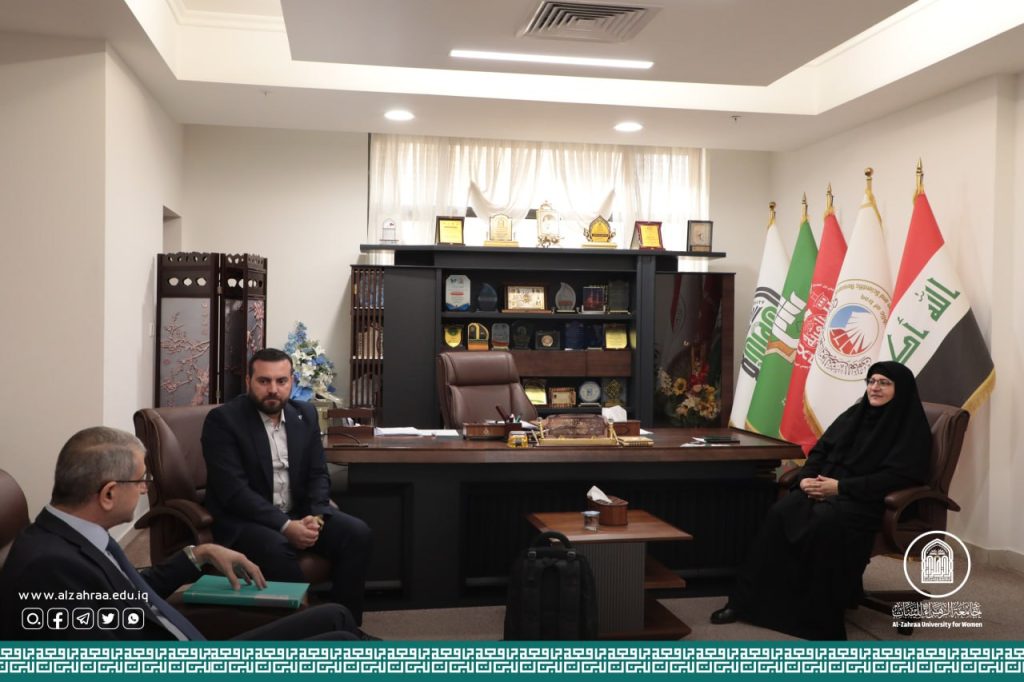
Jordanian Telecommunications Engineering Academy Delegation Visits ZUW to Explore Academic Cooperation
Prof. Dr. Zainab Al-Mulla Al-Sultani, the University President, received a delegation from the Jordanian My Communication Telecommunications Engineering Academy, which specialises in training engineering, teaching and student cadres in the field of telecommuni...
 University News
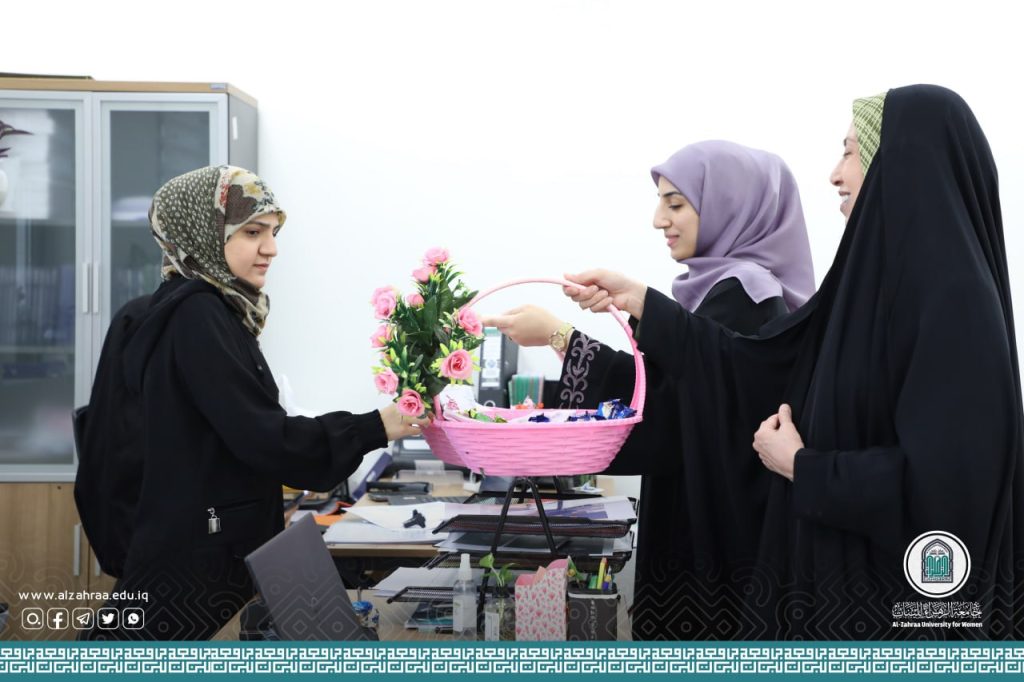
Based on the endeavor of Al-Zahraa University for Women to revive religious occasions, and to sponsor activities that contribute to implanting beliefs and educational and intellectual values, the Women’s Empowerment Division organized an initiative on the occasion of the marriage anniversary of the two lights (Imam Ali and Mrs. Fatima Al-Zahraa (pbutb)). It represented by distributing flowers and sweets to Vice President for Scientific Affairs : Prof. Dr. Zuhair Muhammad Ali Al-Asadi, the deans of colleges and departments heads, as well as the administrative staff, on Tuesday corresponding to 6/20/2023.
Based on the endeavor of Al-Zahraa University for Women to revive religious occasions, and to sponsor activities that contribute to implanting beliefs and educational and intellectual values, the Women’s Empowerment Division organized an initiative on the occa...
 University News
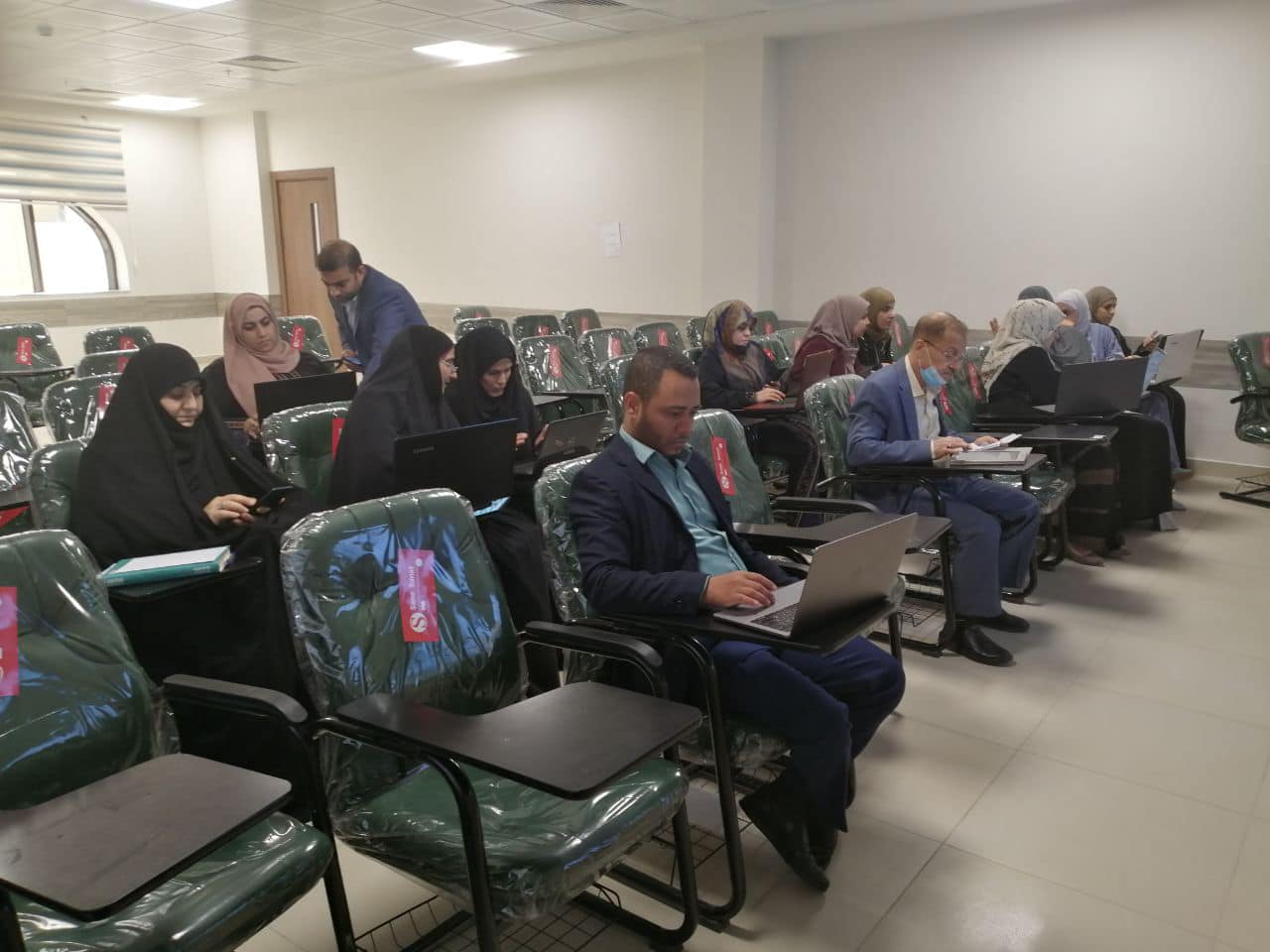
Training Workshop for Academic Staff Held by Anaesthesia Department at Faculty of Health and Medical Technologies
The Department of Anaesthesia at the Faculty of Health and Medical Technologies organised a training workshop entitled “How to Find a Suitable Journal for My Research”, presented by Lect. Dr. Firas Fadhil. The workshop aimed to explain how to identify journals...