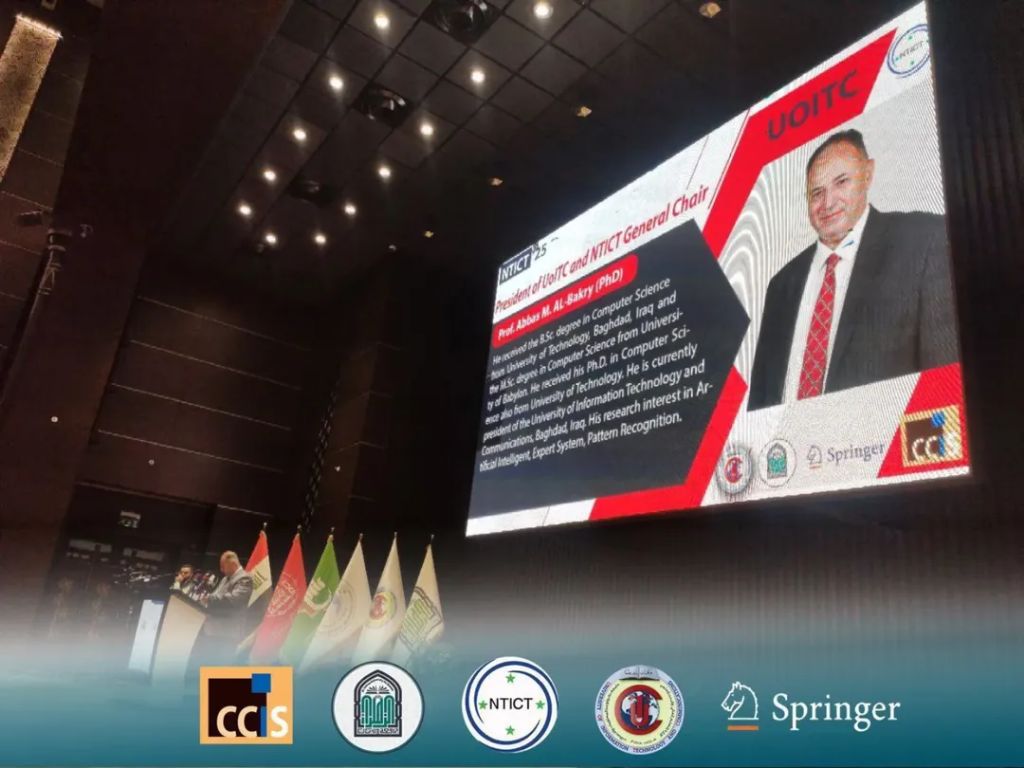
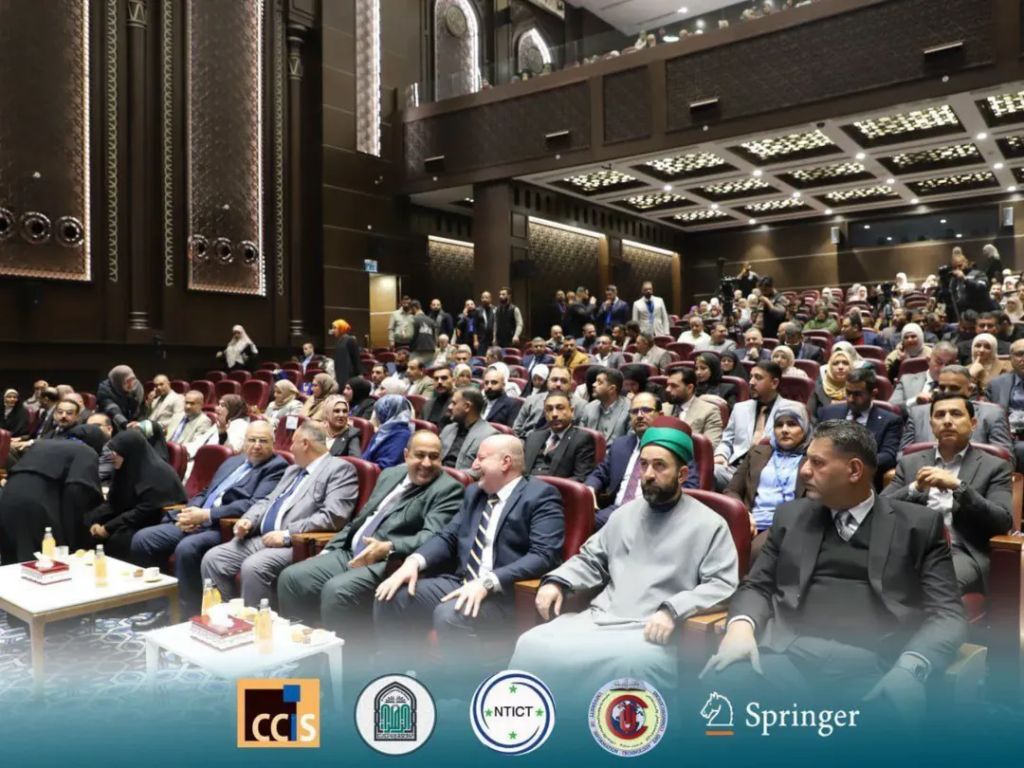
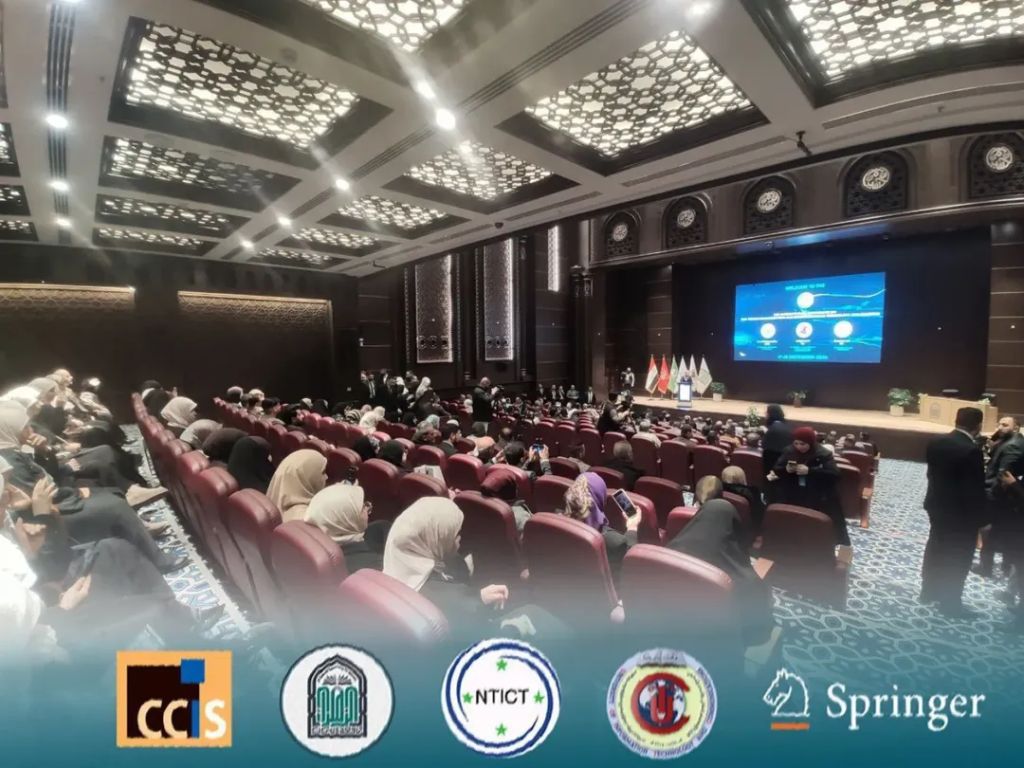
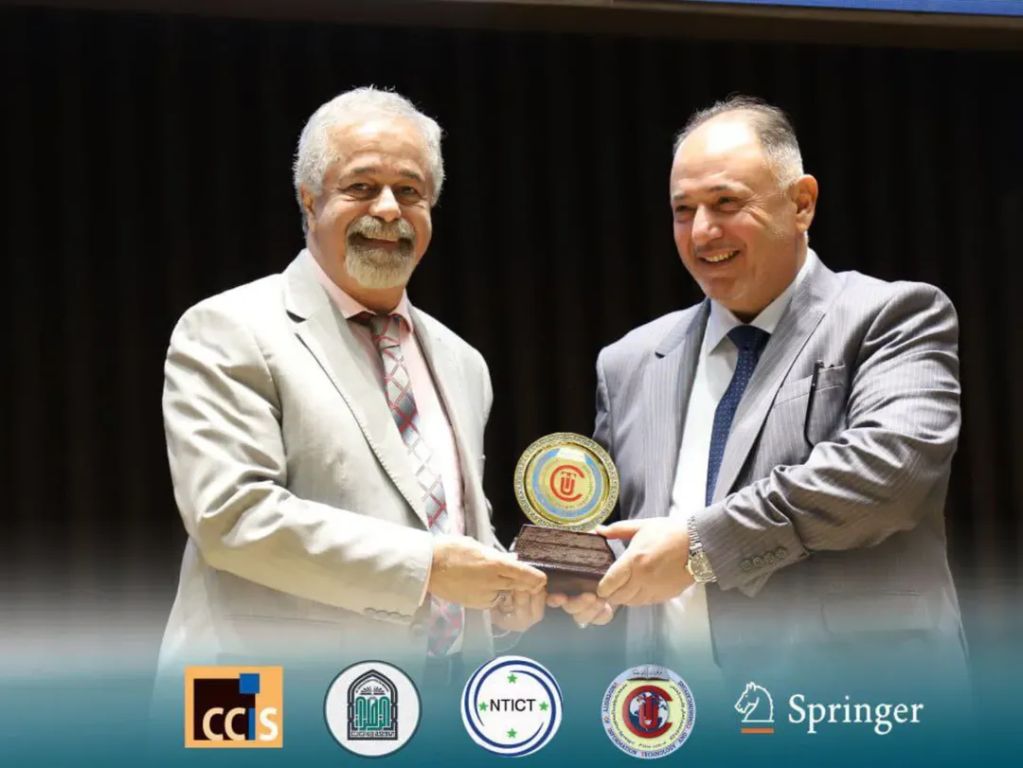
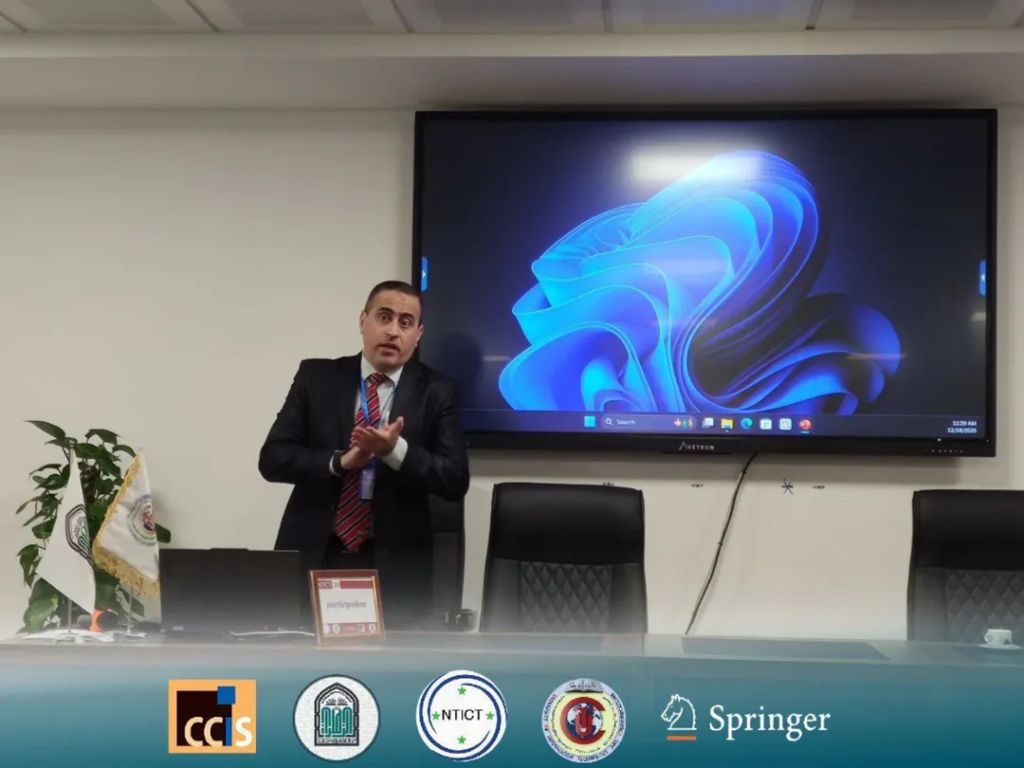
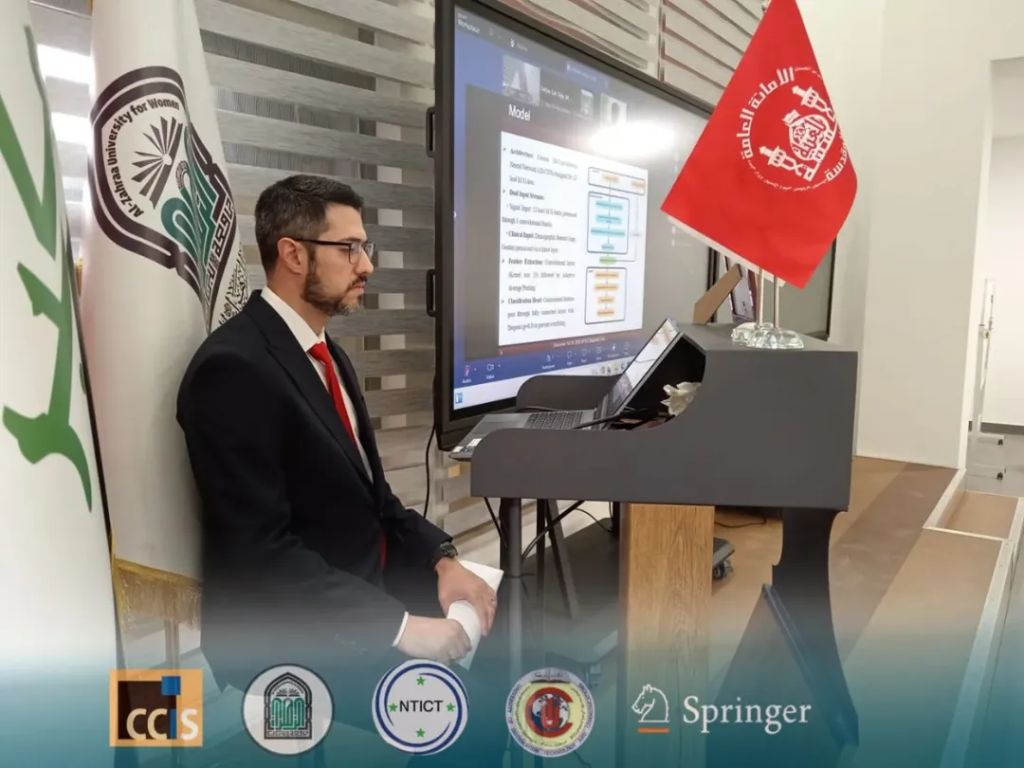
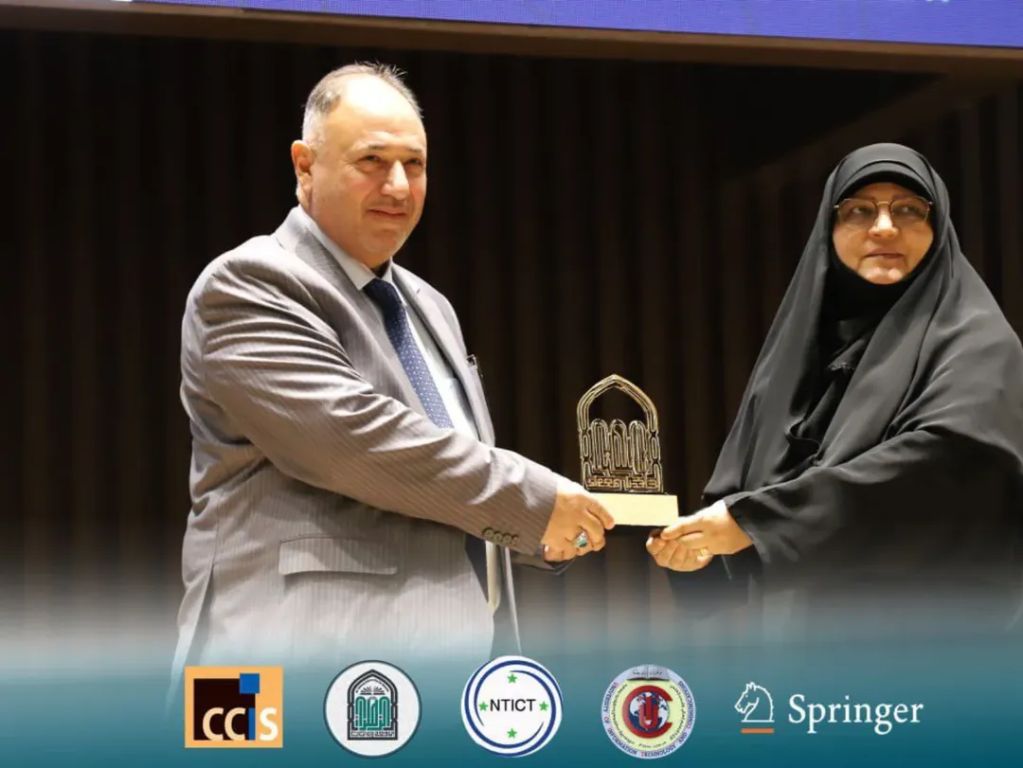
Over two days, the university organized and concluded the 25th NTICT International Conference with broad academic participation.
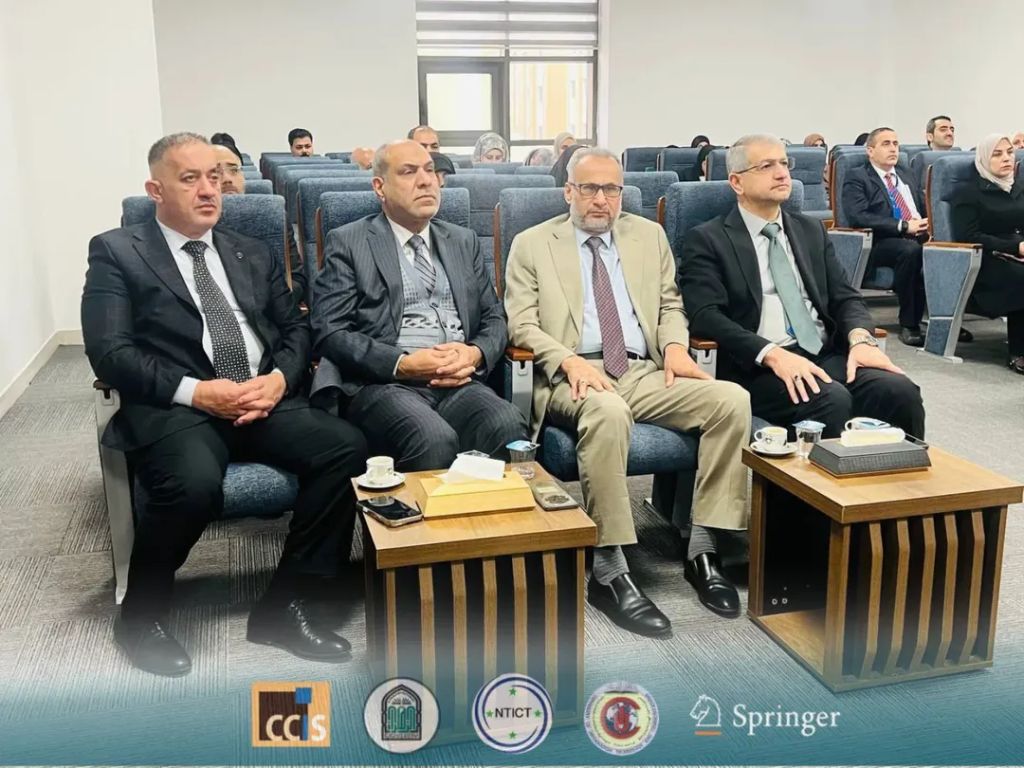
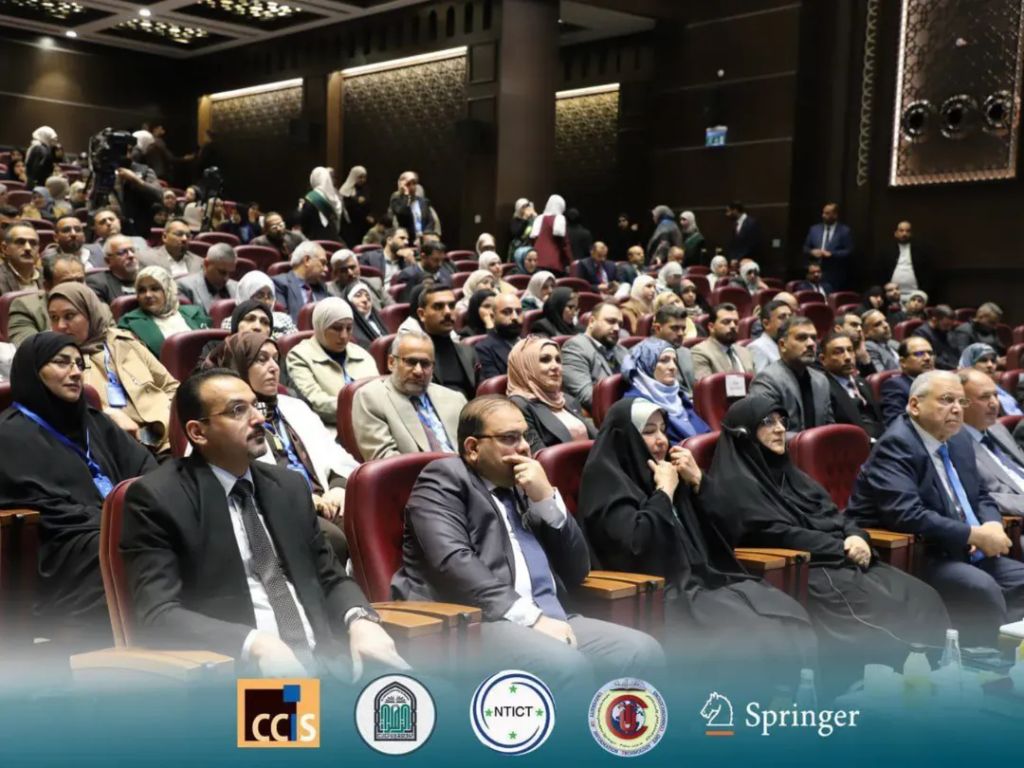
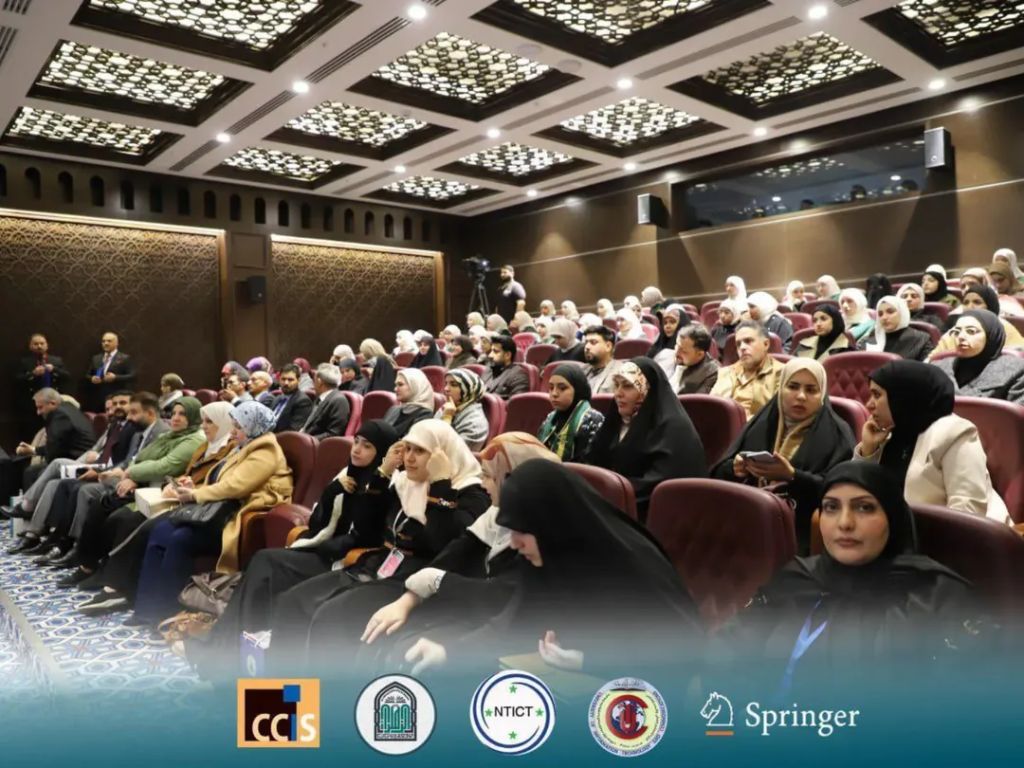
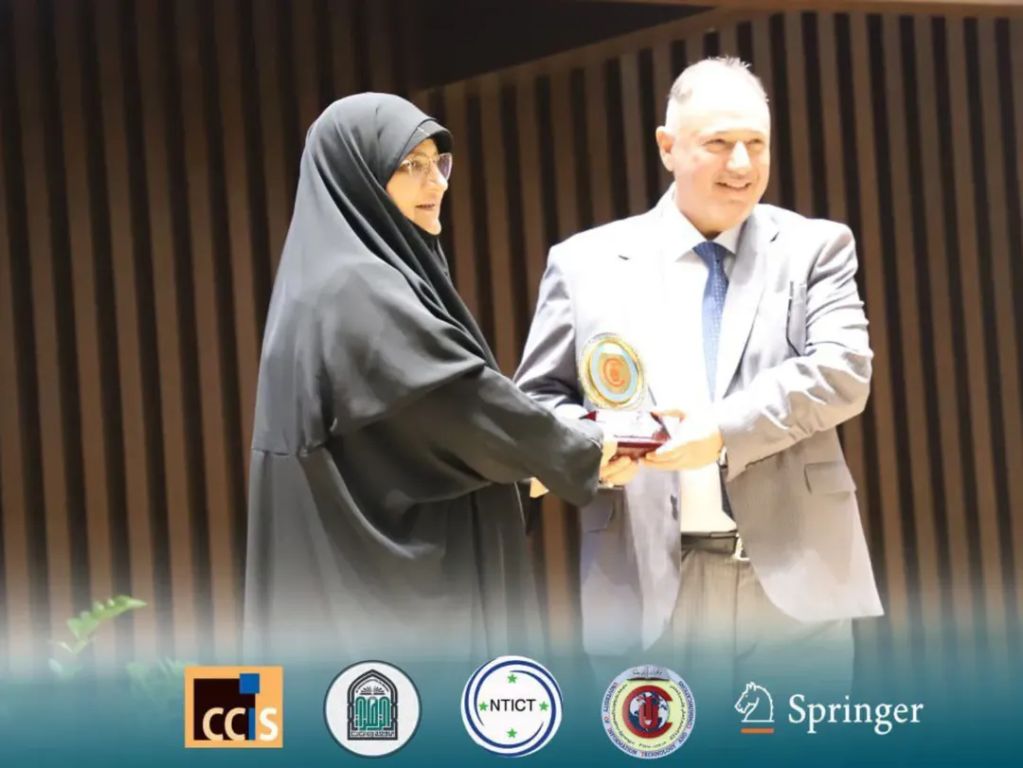
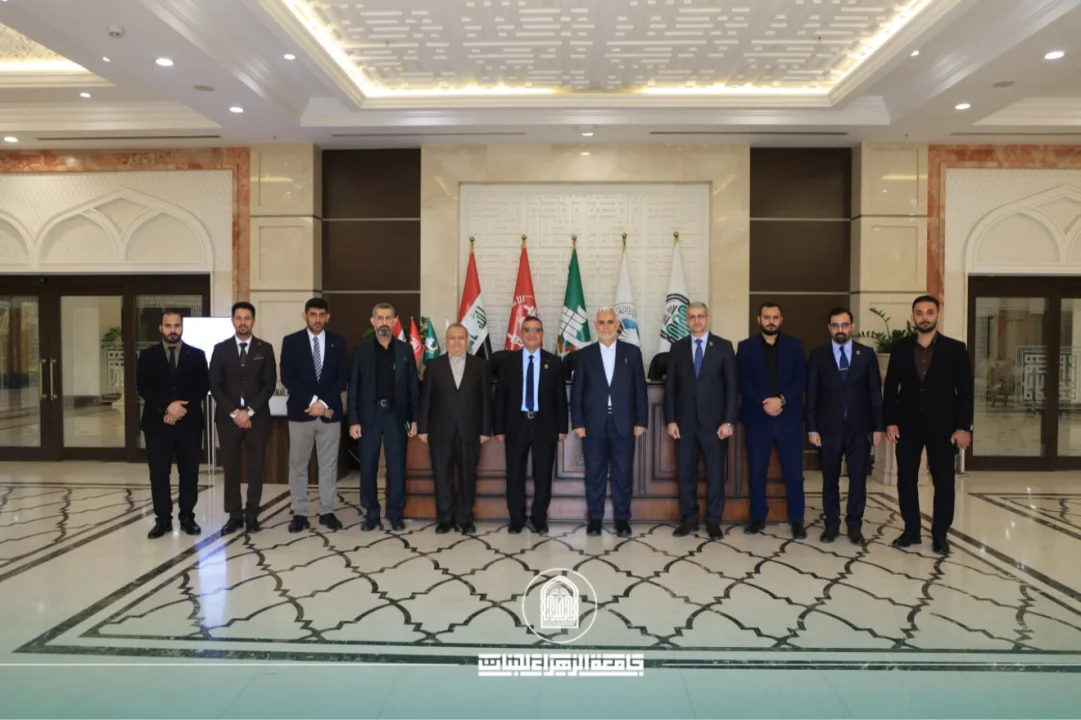
The 9th Annual International Conference titled “Modern Trends in Information Technology and Communications Applications (NTICT 25)” was launched, organized by the University of Information Technology and Communications in cooperation with Al-Zahraa University for Women in Holy Karbala. The conference, held under the patronage of Springer International Publishing, took place on December 17–18, 2025, with wide participation from scientific and academic elites from Iraq and abroad.
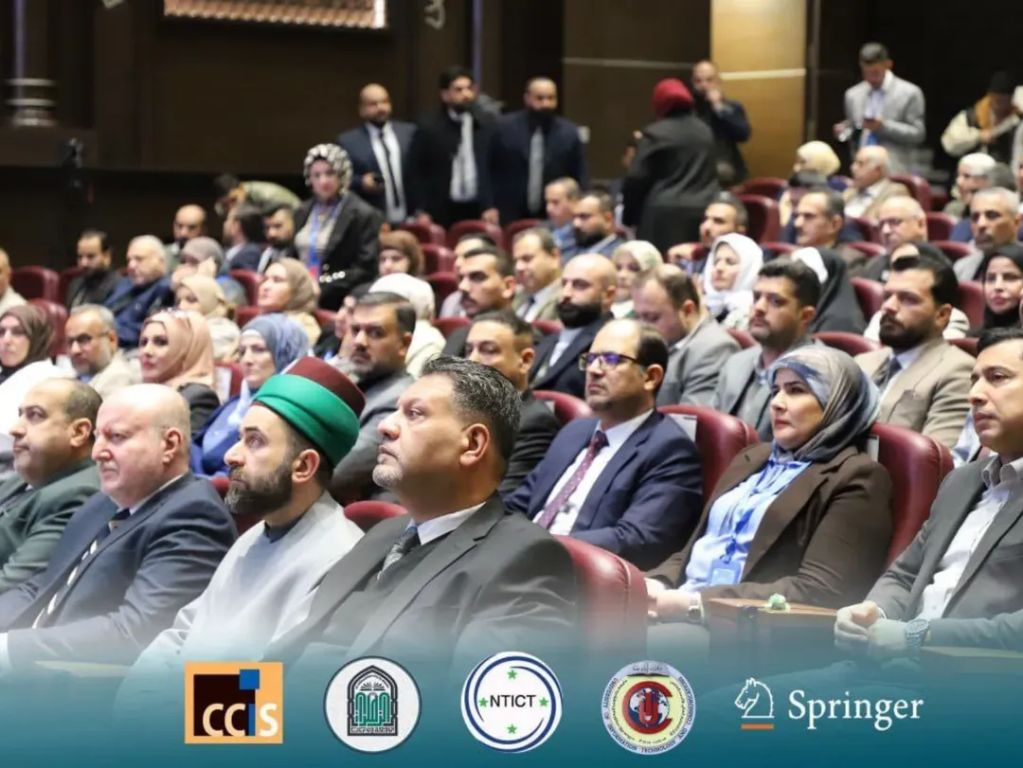
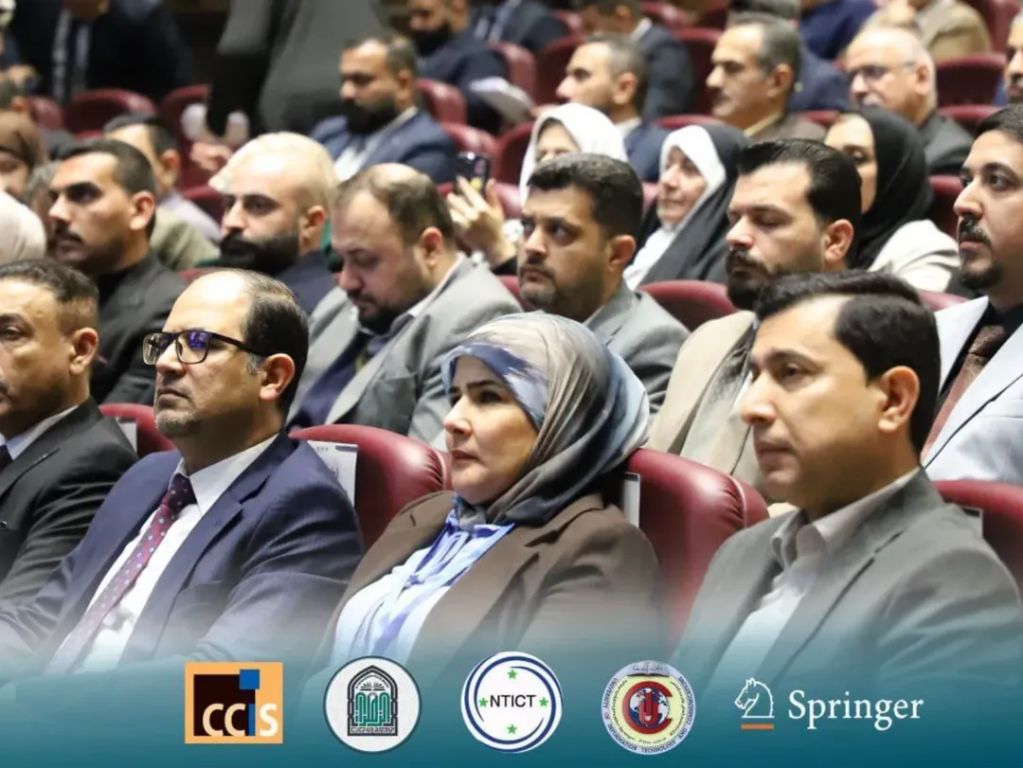
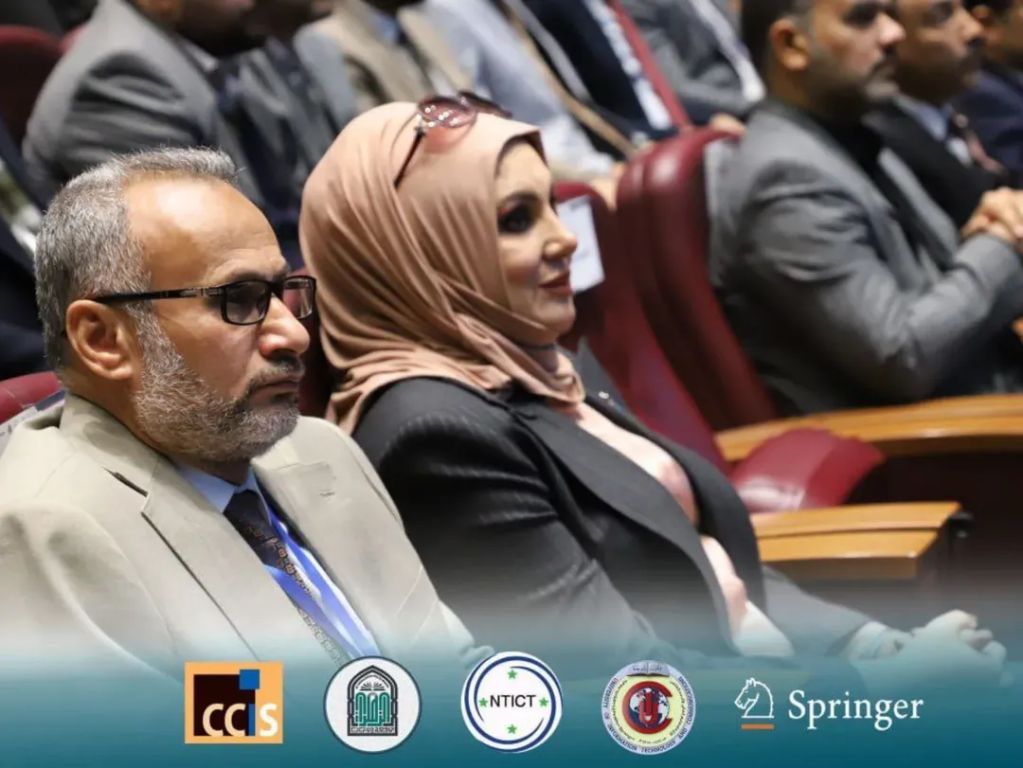
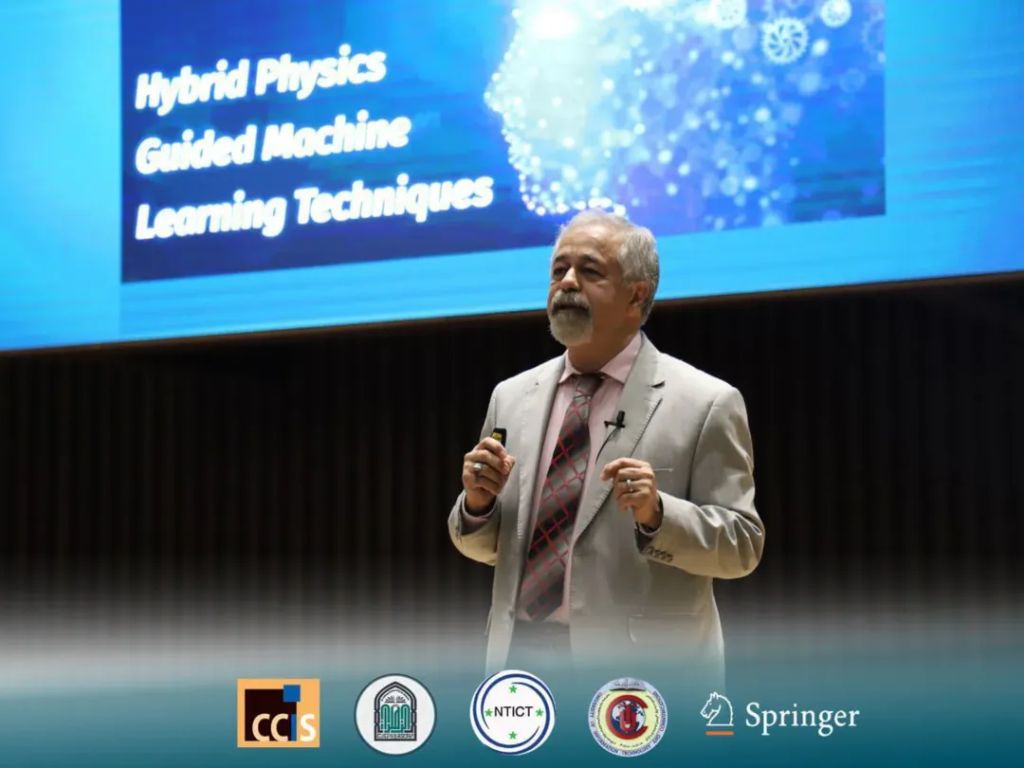
The conference witnessed remarkable attendance of researchers, academics, and specialists in information technology, communications, and artificial intelligence, serving as a distinguished scientific platform for exchanging expertise and discussing the latest global developments and trends in this vital field.
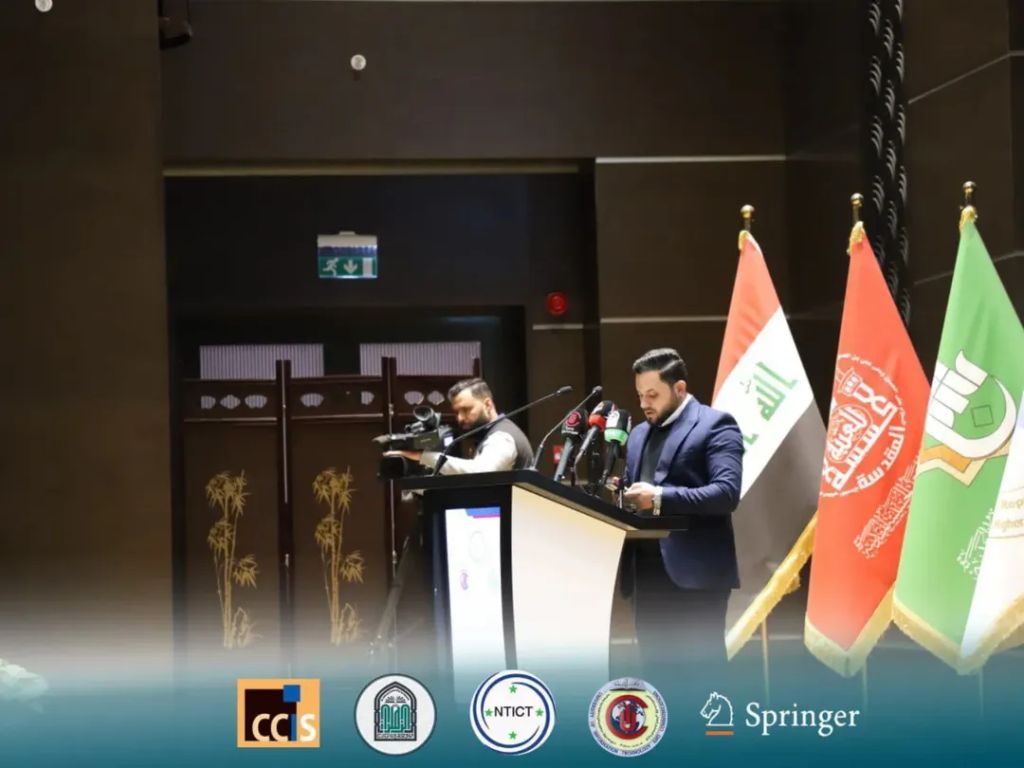
In his opening speech, Prof. Dr. Abbas Mohsen Al-Bakri, Chair of the Conference Preparatory Committee, emphasized that NTICT 25 reflects the university’s commitment to supporting scientific research and enhancing its role in addressing global challenges and building a more secure and sustainable future through the use of AI and information and communication technologies.
He added that the conference brings together researchers from various countries to discuss the latest scientific and technological trends, expressing his anticipation of meeting researchers again in the upcoming 26th NTICT edition.
Al-Bakri noted that the conference received 116 research papers, all of which underwent rigorous peer review and evaluation processes, resulting in the acceptance of 40 papers, with an acceptance rate of 37%, reflecting the high scientific quality of the submitted research.
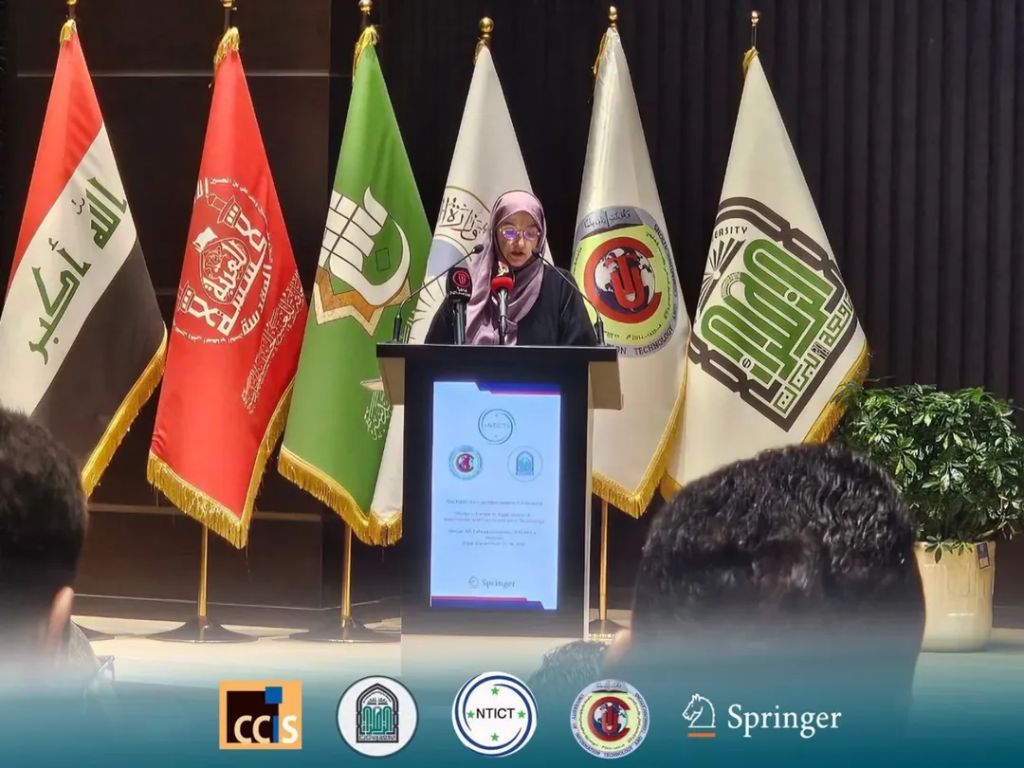
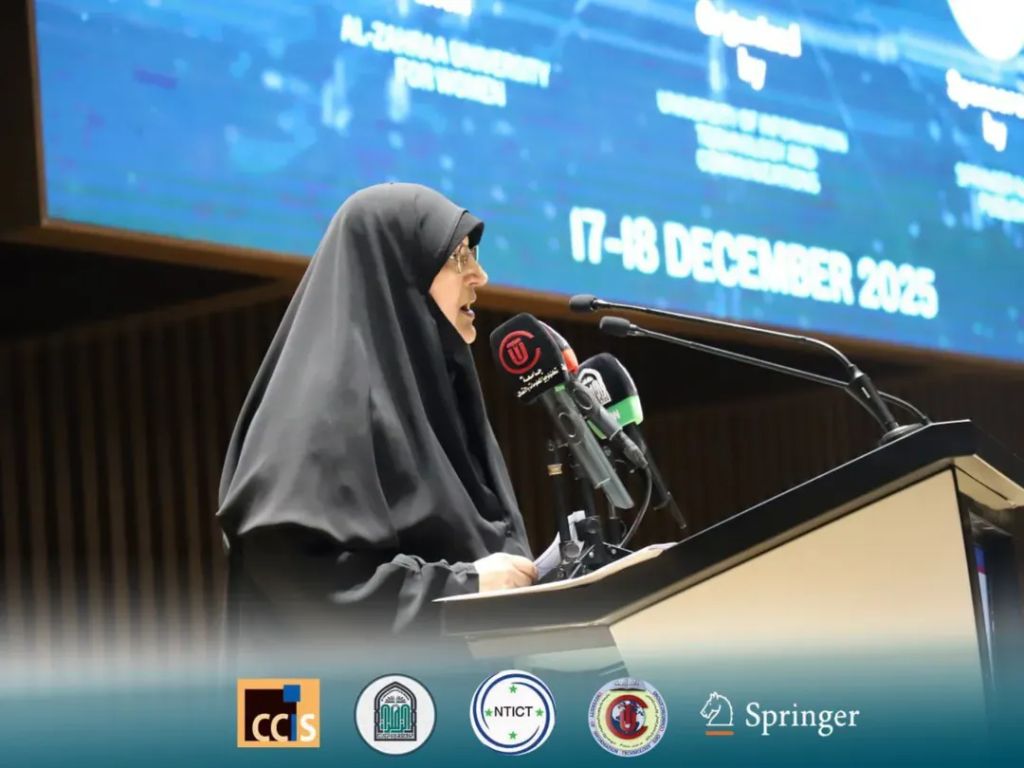
On her part, Prof. Dr. Zainab Al-Sultani, President of Al-Zahraa University for Women, expressed her pride in hosting this international scientific event, affirming that the partnership with the University of Information Technology and Communications represents an important step toward making the university a scientific and research hub that brings together scholars and specialists to discuss modern trends in ICT applications. She added that the conference contributes to linking academic research with practical application and strengthening academic partnerships between educational institutions and various sectors, particularly in artificial intelligence, cybersecurity, and big data analytics.
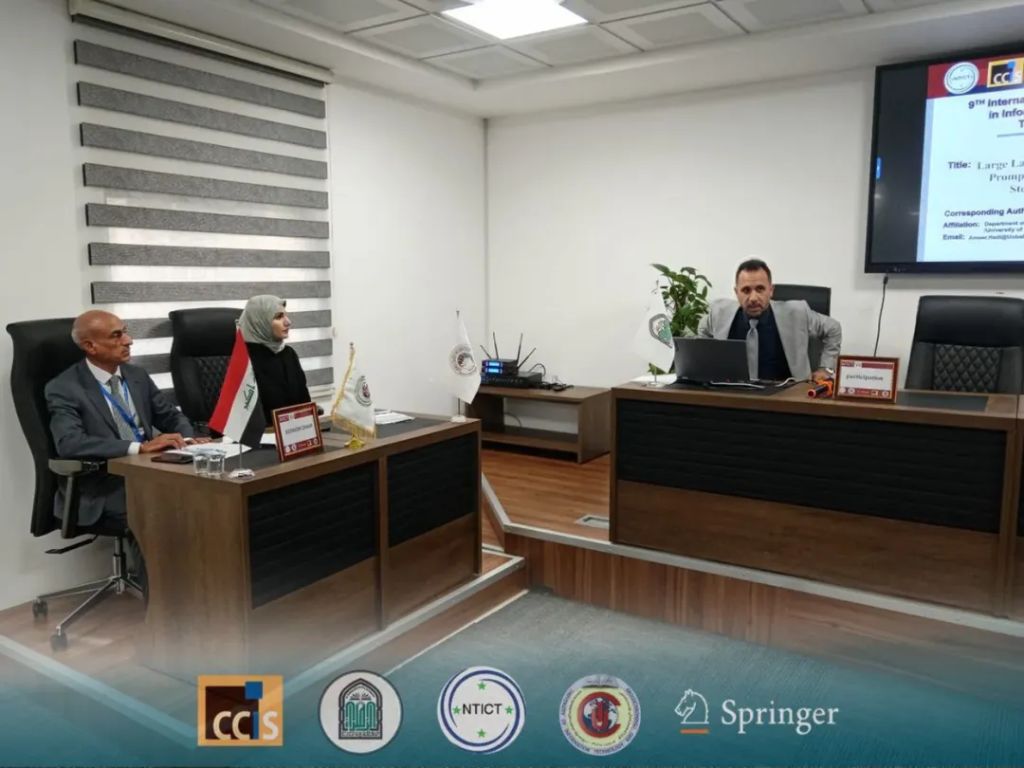
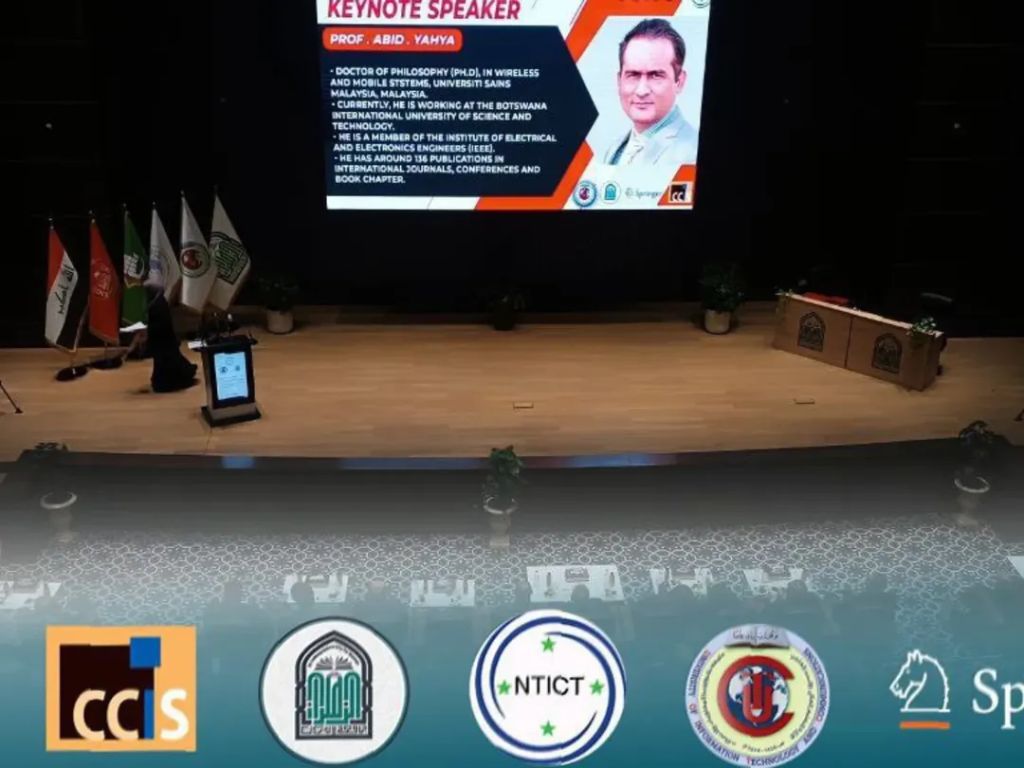
The first day of the conference included speeches by several international experts in technology and artificial intelligence, followed by the launch of the first and second research sessions, where participating researchers presented their scientific studies on various technological applications.
Attachments
Latest News and Activities

Related Posts
Further reading and related articles you may find useful.
 College News
The Dean of the College of Engineering at “Ayn Al-Hayat”… Academic Leadership Translating Creativity into Reality
#DeanOfficeNewsThe Dean of the College of Engineering at “Ayn Al-Hayat”… Academic Presence Translating Creativity into Reality Prof. Dr. Ghidaa Al-Mulla, Dean of the College of Engineering and Information Technology at Al-Zahra University (peace be upon her) f...
 College News
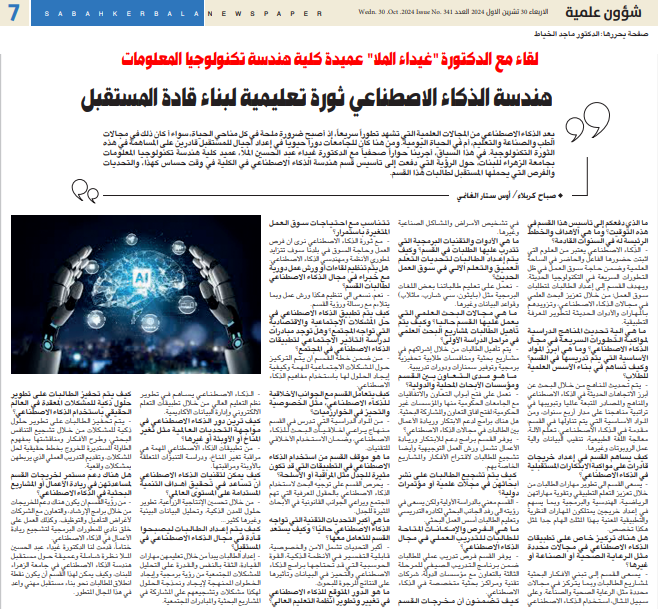
An interview with Dr. Ghaidaa Al-Mulla, Dean of the College of Information Technology Engineering: Artificial Intelligence Engineering is an Educational Revolution for Building Future Leaders.
An interview with Dr. Ghaidaa Al-Mulla, Dean of the College of Information Technology Engineering: Artificial Intelligence Engineering is an Educational Revolution for Building Future Leaders.
 College News
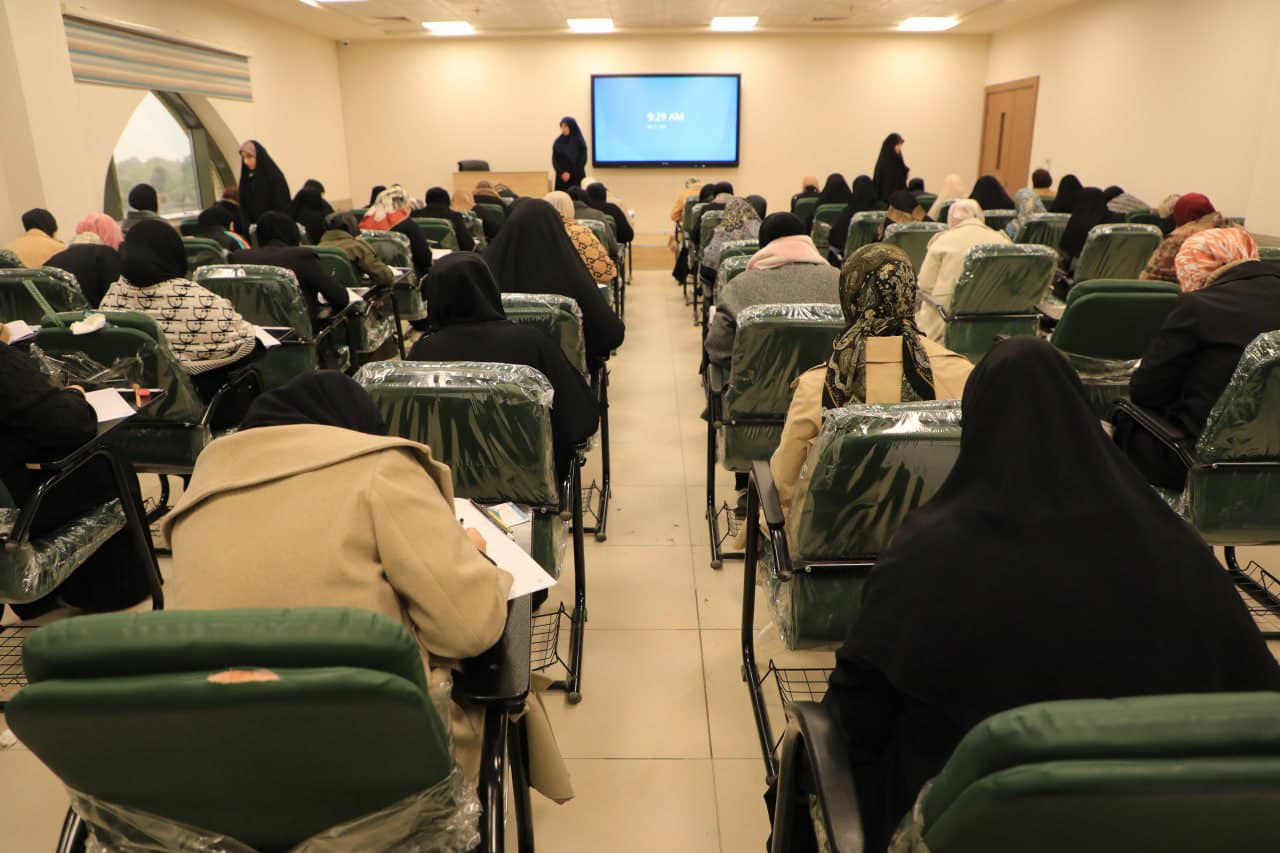
Al-Zahraa University for Women witnessed the commencement of the first day of semester exams for second-year students at the College of Information Technology Engineering, in the Artificial Intelligence Engineering and Cybersecurity Engineering Departments.
Al-Zahraa University for Women witnessed the commencement of the first day of semester exams for second-year students at the College of Information Technology Engineering, in the Artificial Intelligence Engineering and Cybersecurity Engineering Departments. Th...
 College News
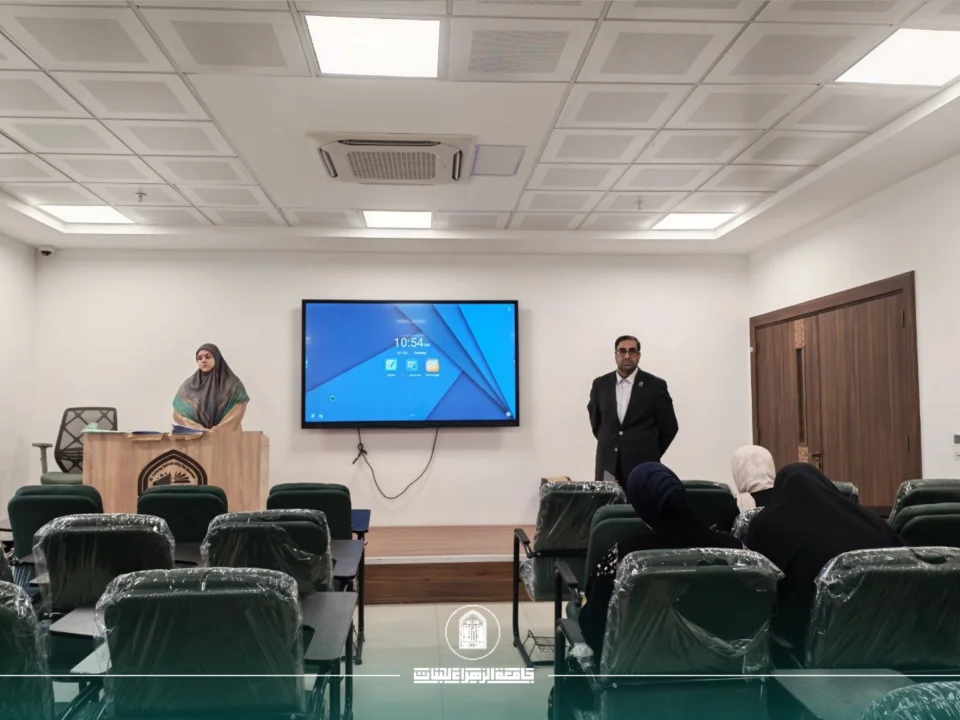
Second-Round Examinations for the 2025–2026 Academic Year Commence Across All Departments and Study Levels
Second-round examinations for the 2025–2026 academic year have commenced at the College of Engineering and Information Technology, with students from all departments and study levels taking part. The examinations are being conducted in a well-organized and aca...