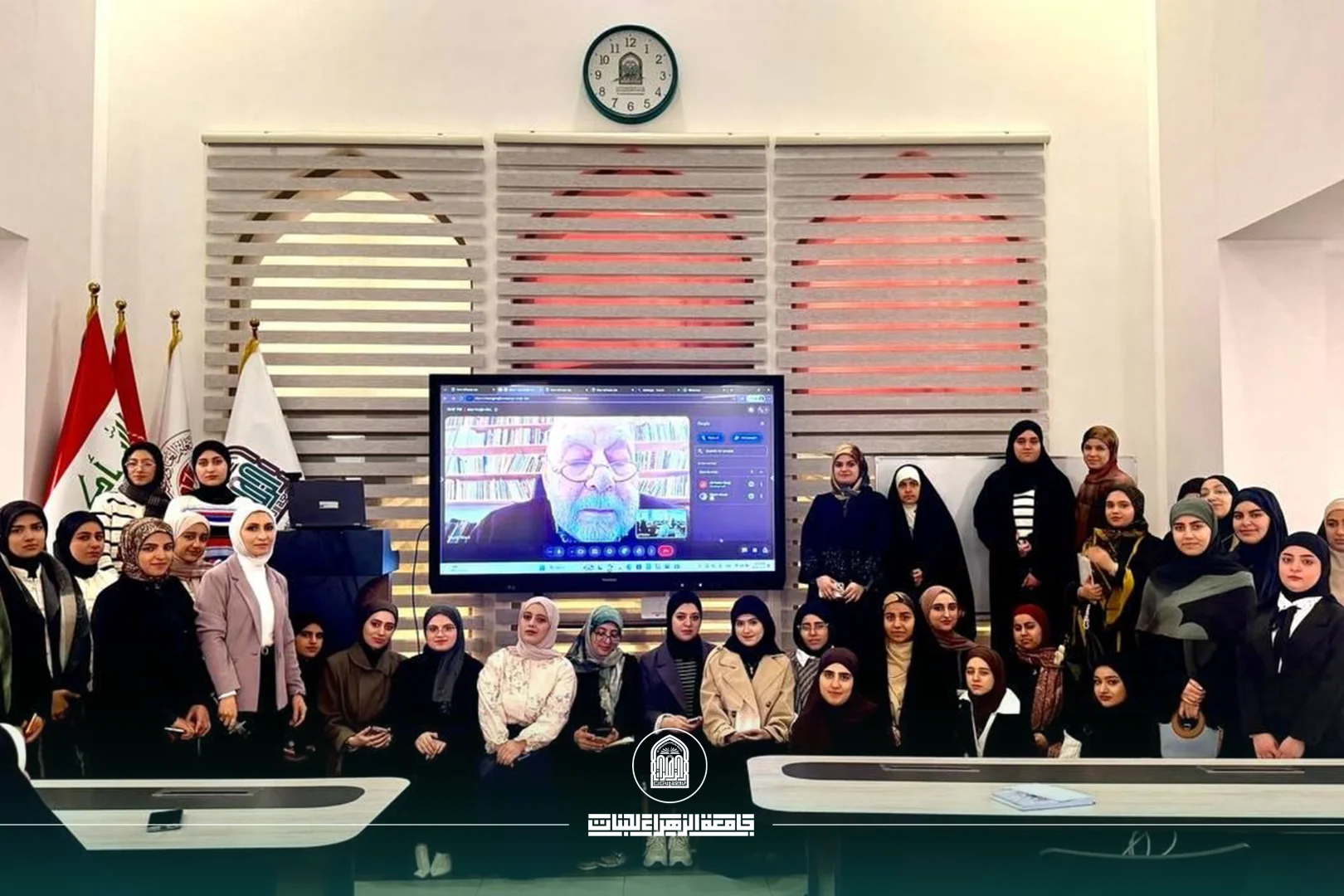
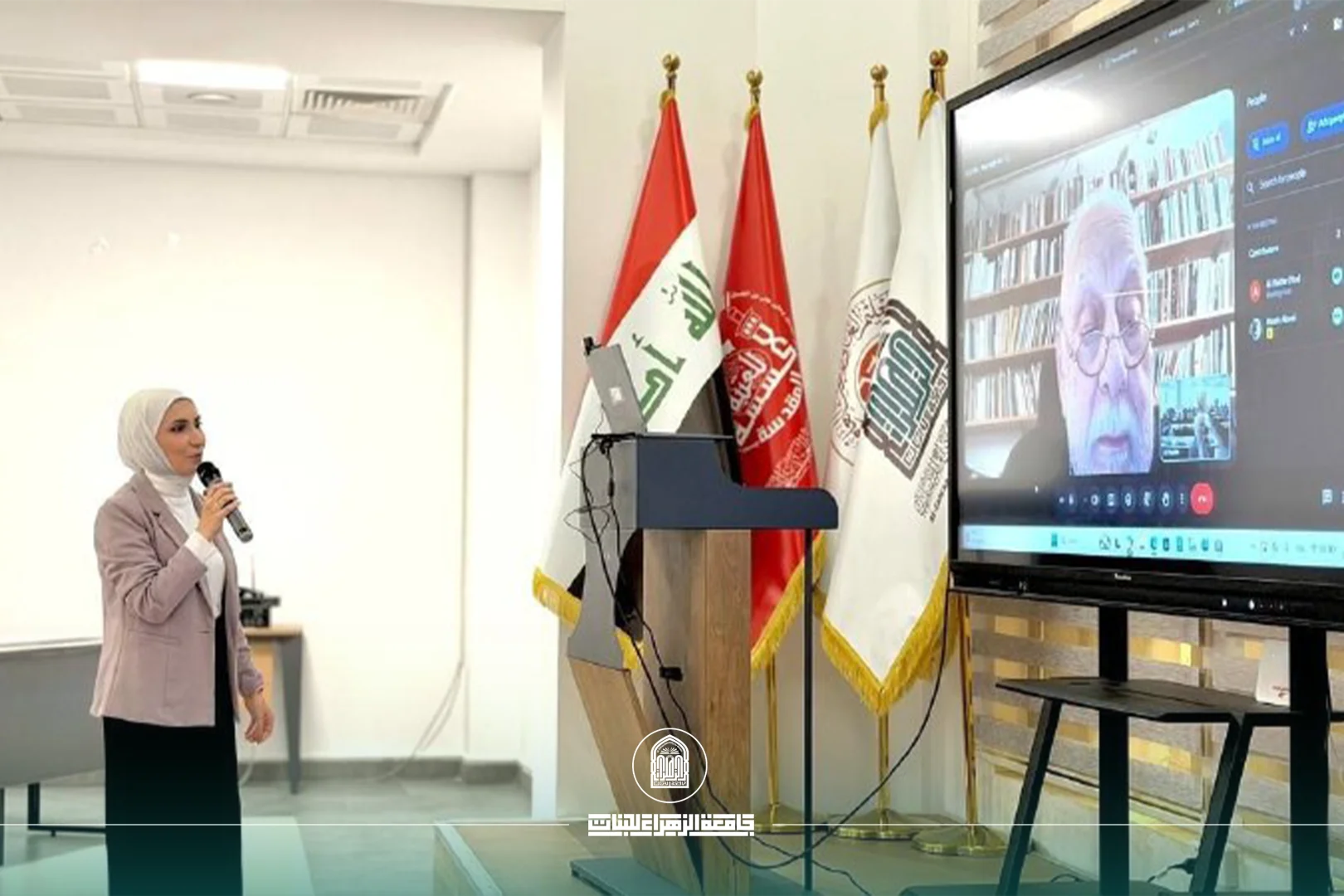
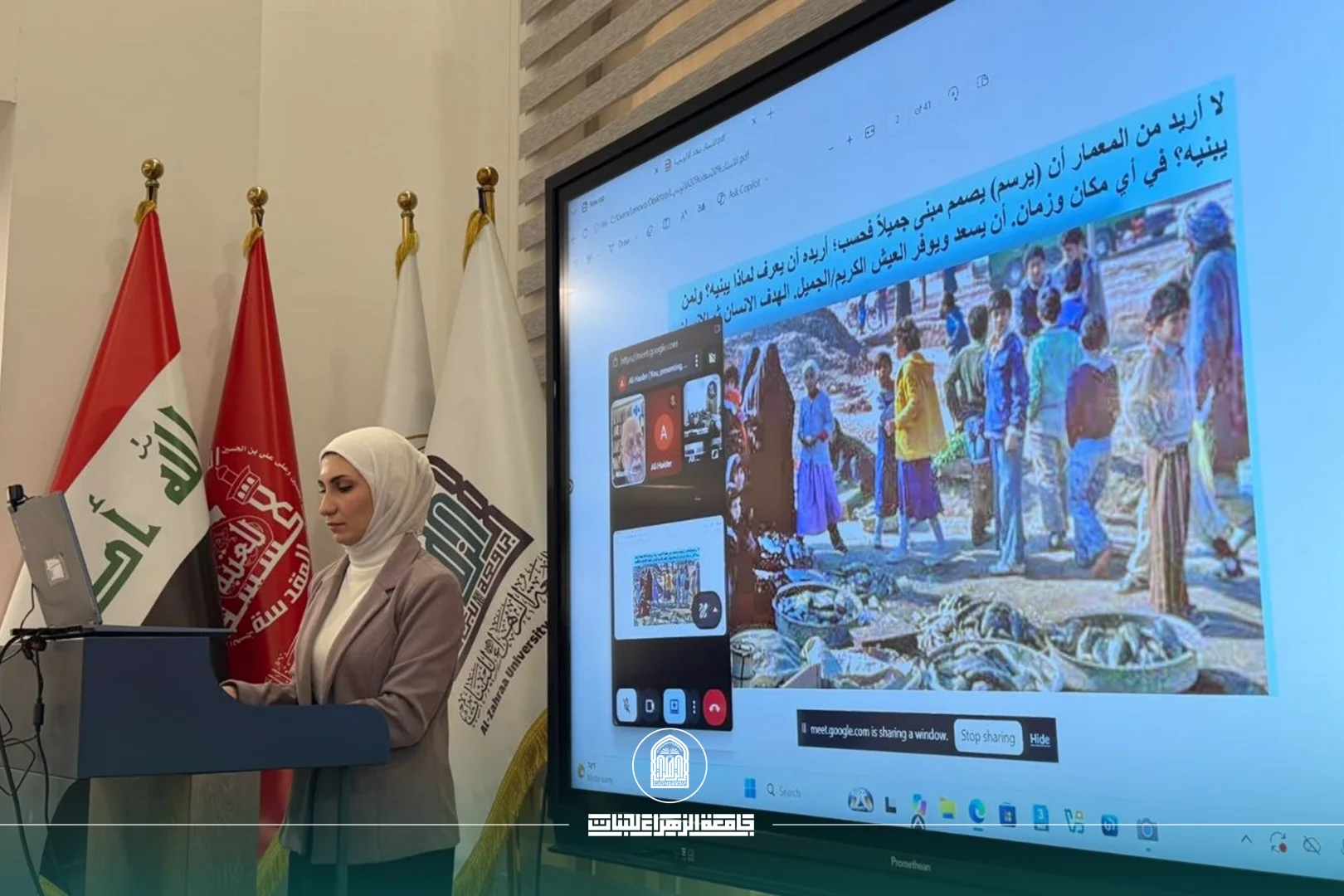
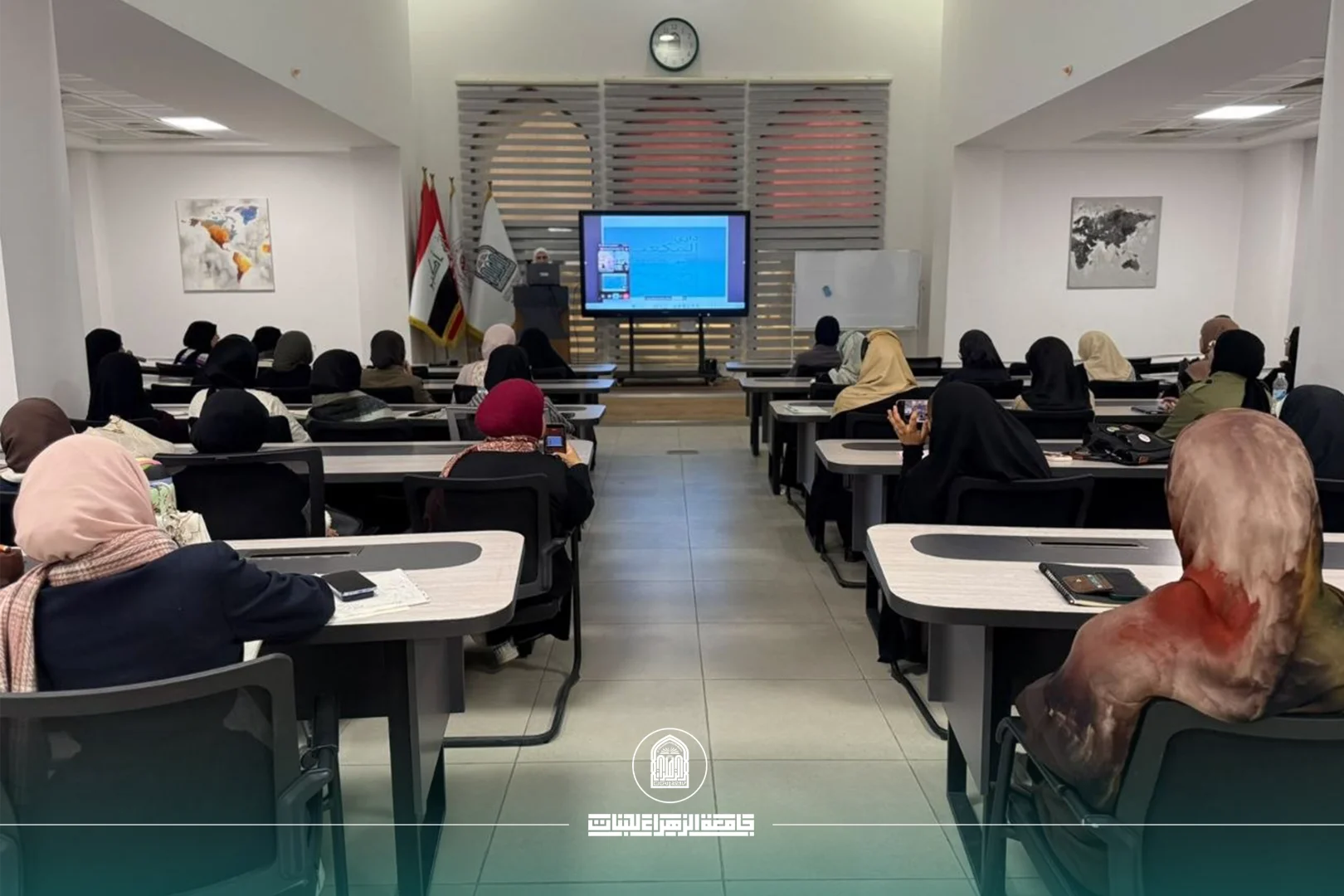
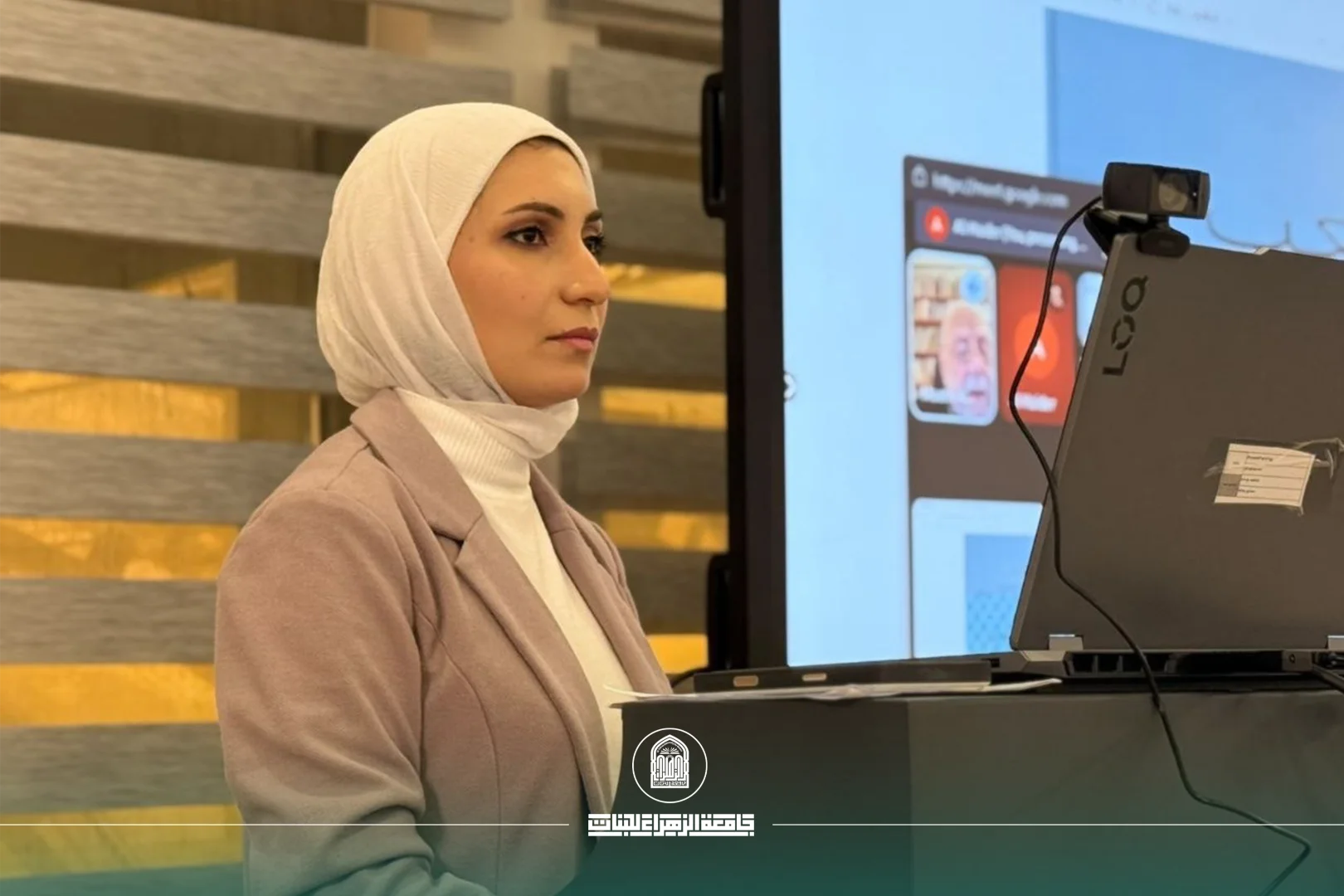
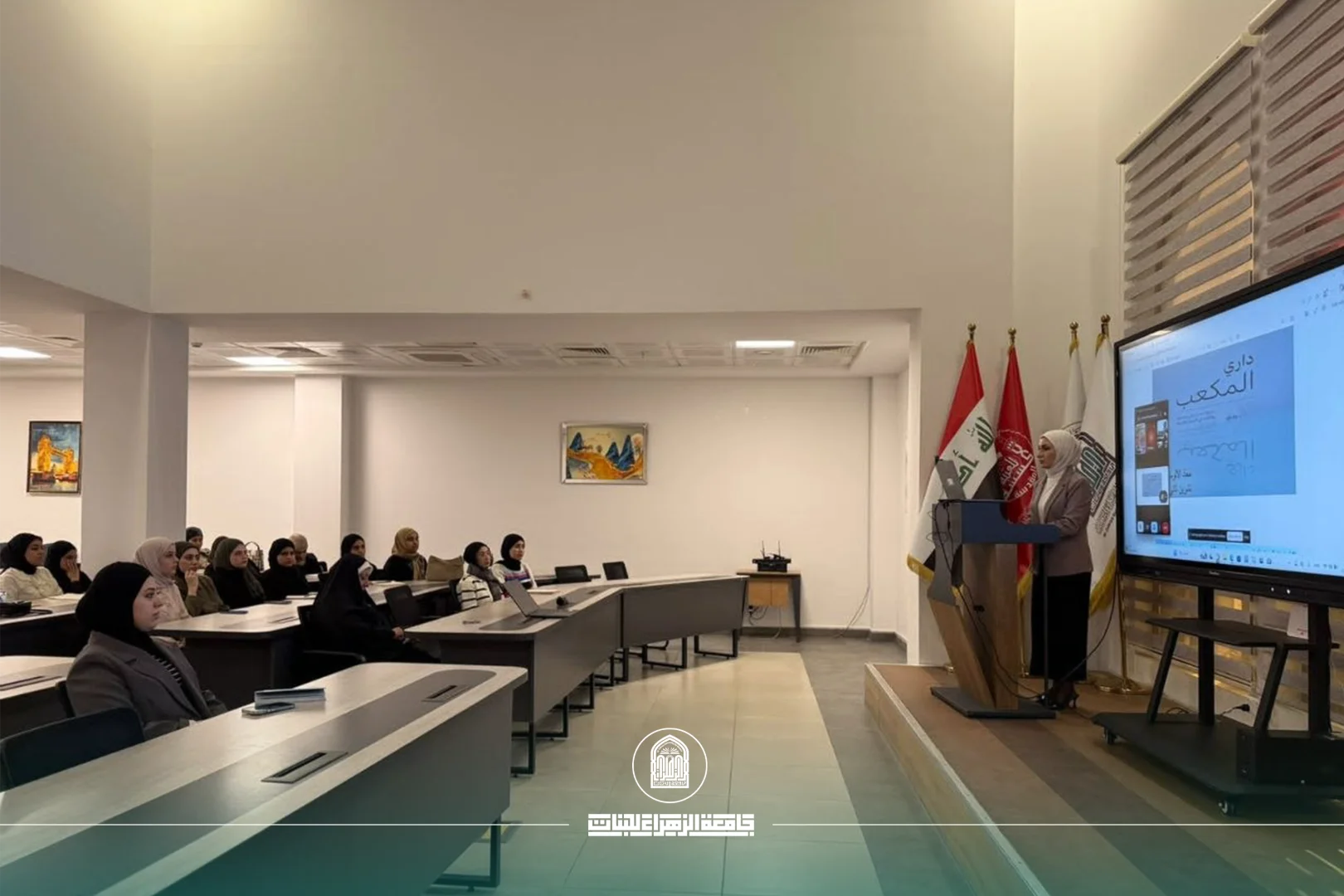
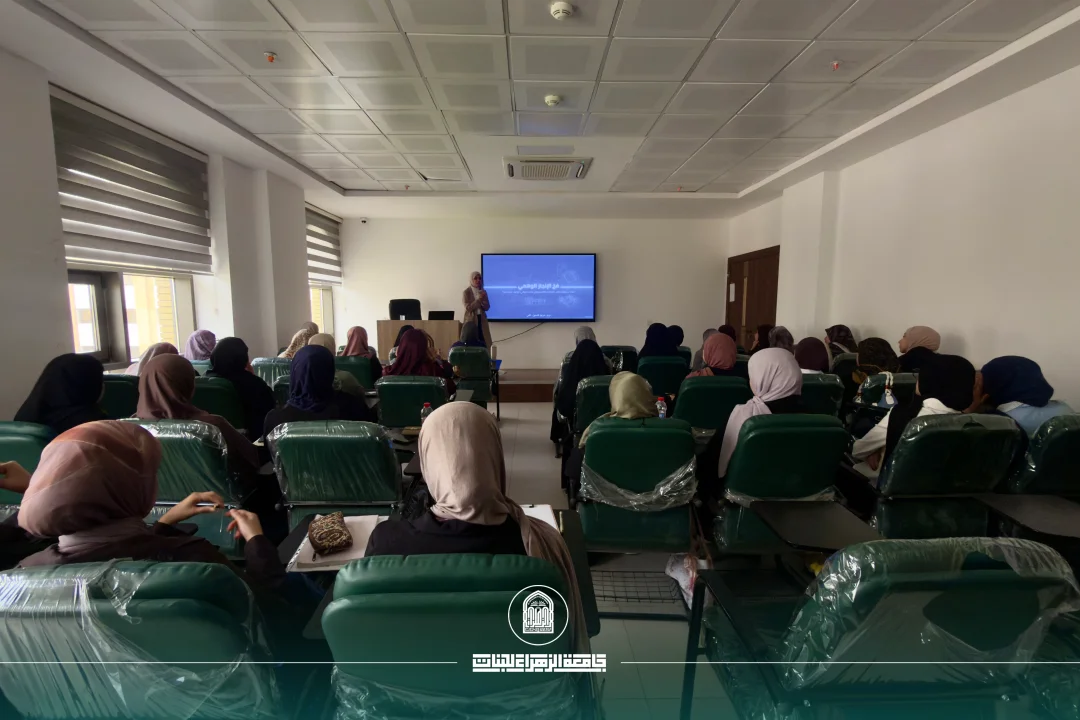
The College of Engineering and Information Technology hosted renowned Iraqi architect Professor Muath Al-Alousi, recipient of the Tamayouz Lifetime Achievement Award, in a specialized scientific workshop entitled “The Cubic House: An Exploration of Experience and Place.” The workshop was held at Al-Kawthar Hall via Microsoft Teams, with the participation of female students from the Department of Architecture Engineering.
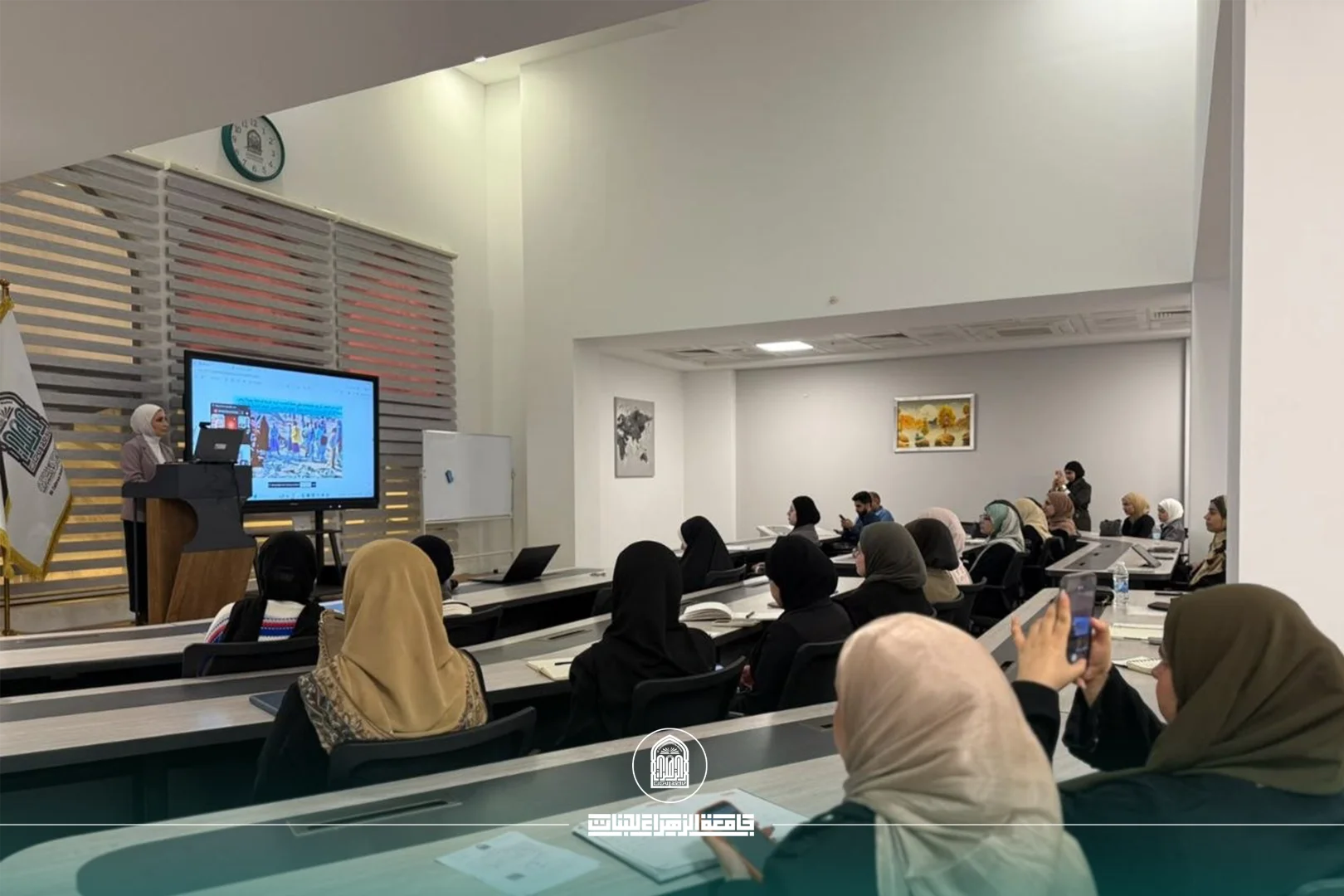
The workshop began with an introductory presentation by lecturer Asst. Lecturer Umaima Kadhim Al-Taie, who outlined Architect Muath Al-Alousi’s biography and the major milestones of his professional and intellectual career. She also highlighted the concept of “Human-Centered Architecture” as a philosophical approach that considers people the starting point, meaning, and ultimate purpose of architectural design, emphasizing that the value of a place lies in how well it responds to human needs and aspirations.
In the main session, Architect Muath Al-Alousi presented his vision of “People as the Core of the Design Process,” discussing his architectural philosophy and showcasing examples of his residential design projects. He explored how lifestyles and human needs influence the formation of architectural spaces, as well as the relationship between architecture and society. He further emphasized the importance of respecting cultural, social, and environmental contexts while achieving harmony with local identity and architectural character. He summarized his philosophy in one guiding principle: “People, then people, then people.”
The workshop featured an interactive discussion between the speaker and the students, during which several questions were raised about architectural practice, design philosophy, and the architect’s role in understanding places and responding to community needs. This provided students with a valuable opportunity to engage directly with the experience of a leading Iraqi architect.
The workshop concluded by emphasizing the importance of promoting an architectural vision that places people and society at the heart of the design process, while allowing each place to express its identity through an understanding of its needs and unique characteristics. This contributes to strengthening students’ architectural awareness and bridging the gap between academic knowledge and professional and intellectual experience.
Attachments

Latest News and Activities
Related Posts
Further reading and related articles you may find useful.
 Department News
From the classroom to the field… architecture students witness the dream before completion
#Visits:From the classroom to the field… architecture students witness the dream before completion In a vibrant, hands-on learning experience, the College of Engineering and Information Technology – Department of Architecture organized a scientific site visit...
 Department News
"The Trap of Illusory Achievement".. An architecture workshop to rethink what real academic achievement means
The College of Engineering and Information Technology organised a scientific workshop titled 'The Trap of Illusory Achievement', presented by lecturer Maryam Hussein Ali from the Department of Architecture Engineering. The workshop highlighted the importance o...
 Department News
A Scientific Field Trip for Architectural Engineering Students to Al-Fatimi Courtyard to Enhance Applied Knowledge
Trips:A Scientific Field Trip for Architectural Engineering Students to Al-Fatimi Courtyard to Enhance Applied Knowledge The College of Engineering and Information Technology – Department of Architectural Engineering organized a scientific field trip for secon...
 Department News
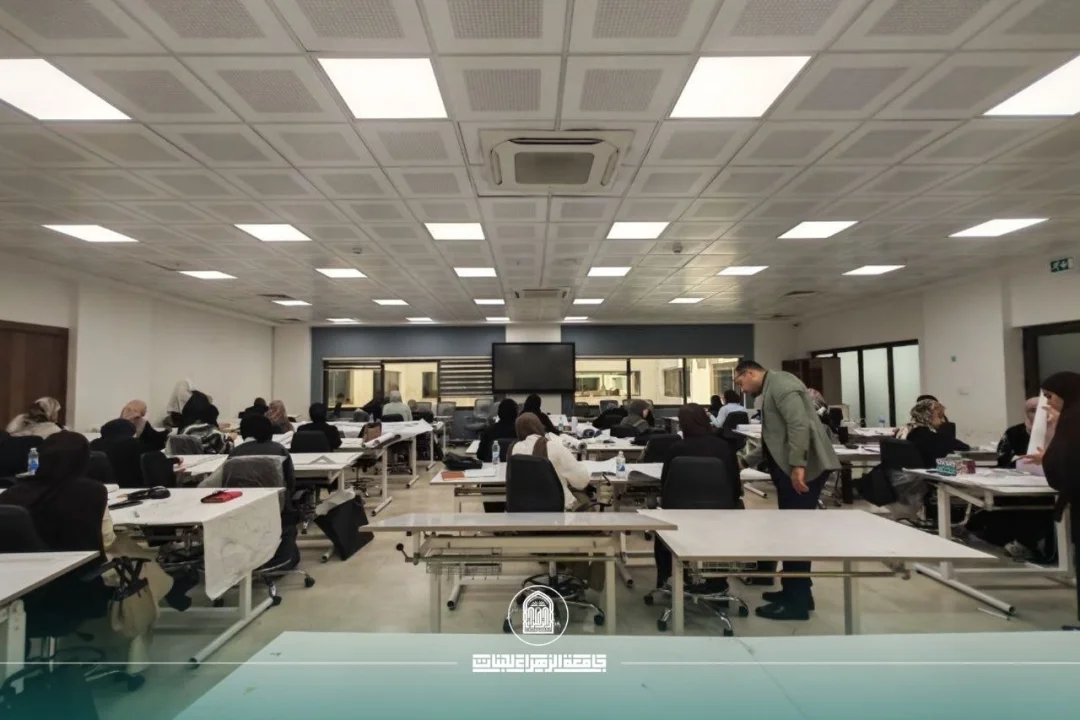
Architecture is about sketching ideas and building visions.. third-year students in design class
The Department of Architecture at the College of Engineering and Information Technology has kicked off its academic and practical programmes, within the design course for third-year students, aiming to develop design skills and enhance the ability to apply eng...