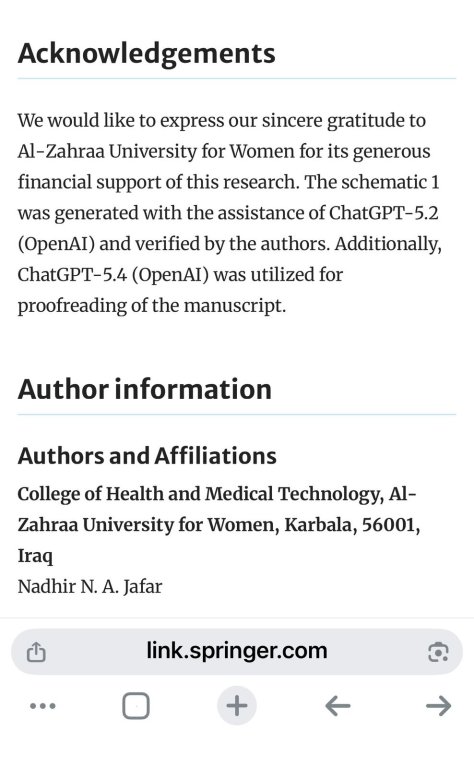
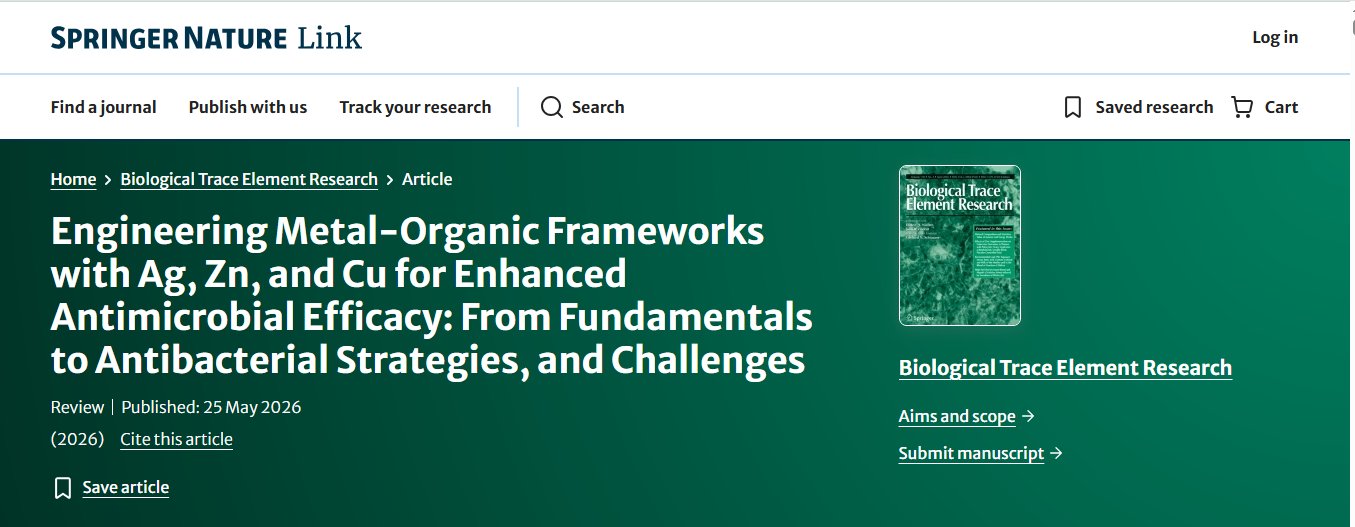
In a remarkable academic milestone that elevates our university's standing in international scientific forums, the official website is proud to highlight a stellar new achievement. Professor Dr. Nazir Najim Abdullah Al-Gatrani, Dean of the College, has led a distinguished research team in publishing a rigorous scientific paper in the prestigious international publishing house Springer Nature, specifically in the journal Biological Trace Element Research (Impact Factor: 3.6), which is indexed in world-class databases including Clarivate and Scopus.
This exceptional academic endeavor was generously supported and funded by Al-Zahraa University for Women, culminating in a comprehensive and robust review article that merges innovative perspectives with profound scientific analysis.
Research Scope and Core Content: The study focuses on the engineering of Metal-Organic Frameworks and is titled: “Engineering Metal-Organic Frameworks with Ag, Zn, and Cu for Enhanced Antimicrobial Efficacy: From Fundamentals to Antibacterial Strategies, and Challenges”
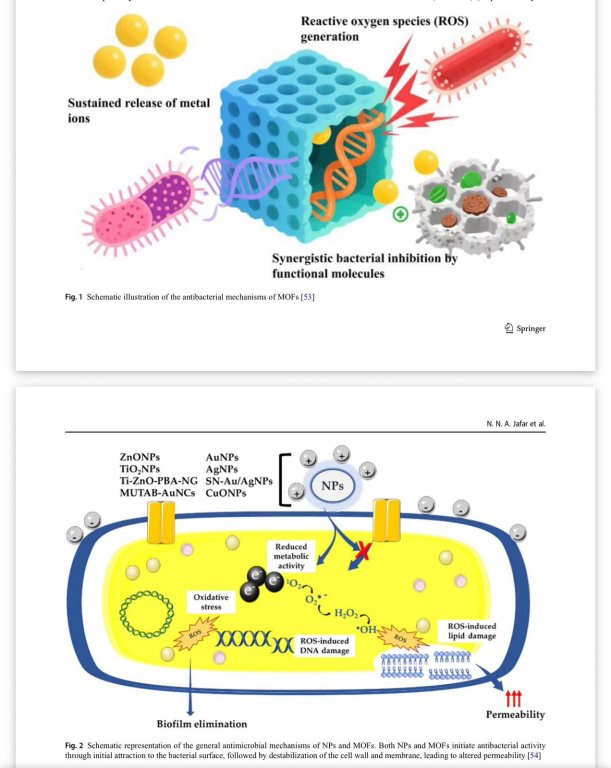
The research addresses Metal-Organic Frameworks (MOFs) containing silver (Ag), zinc (Zn), and copper (Cu) as highly promising materials to combat the global threat of antibiotic-resistant bacteria. It illustrates how these frameworks function by releasing metal ions and generating Reactive Oxygen Species (ROS), which effectively damage and destroy bacterial cells.
Key Findings and Future Outlines: The paper provides a critical comparison of the studied elements, revealing that Ag-MOFs exhibit the highest antimicrobial efficacy, Zn-MOFs offer the best biocompatibility for living systems, and Cu-MOFs stand out as the most cost-effective solution.
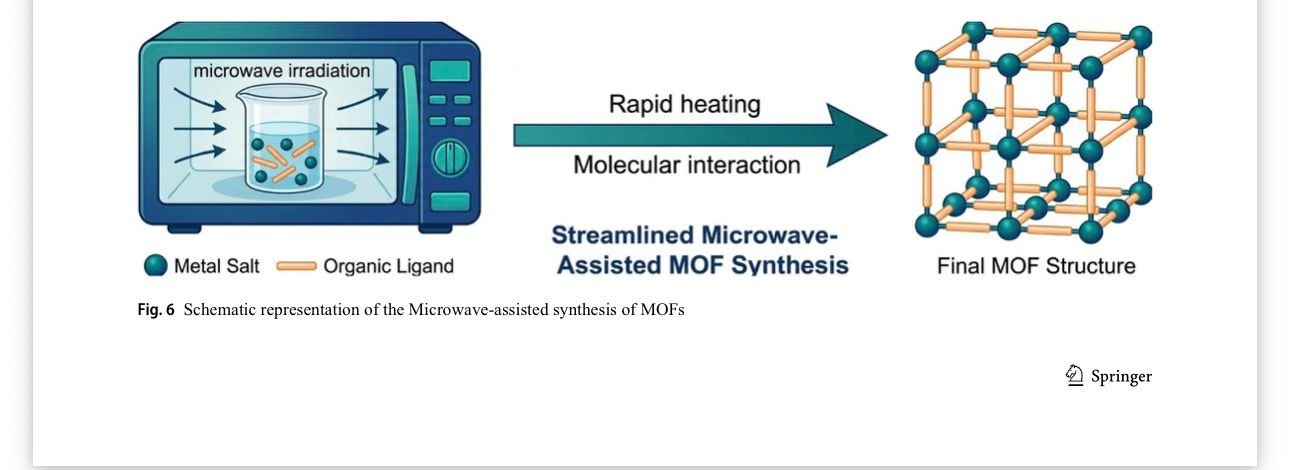
Furthermore, the study reviews advanced preparation methods alongside diverse medical and environmental applications. It thoroughly discusses current challenges regarding stability and biosafety while mapping out future perspectives for developing "smart MOFs" tailored for next-generation therapeutic applications.
This qualitative breakthrough is a valuable addition to the global scientific community—a commendable achievement, a source of pride in the fields of research and innovation, and a testament to the academic excellence fostered within our institution.
Attachments
Latest News and Activities
Related Posts
Further reading and related articles you may find useful.
 College News
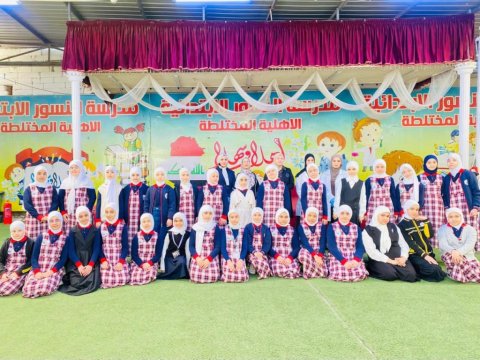
Volunteer Campaign to Screen Children for Thalassemia
As part of its social responsibility and its efforts to promote a culture of early screening, and under the patronage of the President of Al-Zahraa University for Women, Prof. Dr. Zainab Al-Mulla Al-Sultani, the College of Health and Medical Technologies, unde...
 College News
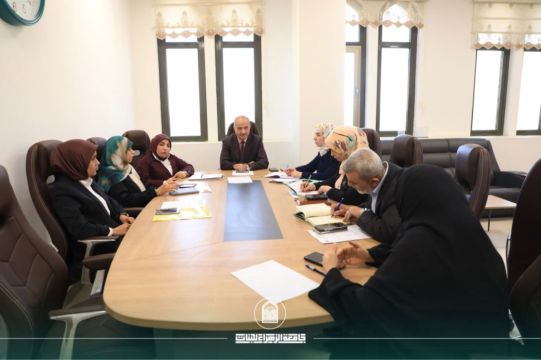
College of Health and Medical Technologies Council Holds Sixth Session
The Council of the College of Health and Medical Technologies held its sixth session under the chairmanship of the Dean of the College, Assistant Professor Dr. Ali Jassim Al-Khafaji, and in the presence of the esteemed Council members. During the meeting, the...
 College News
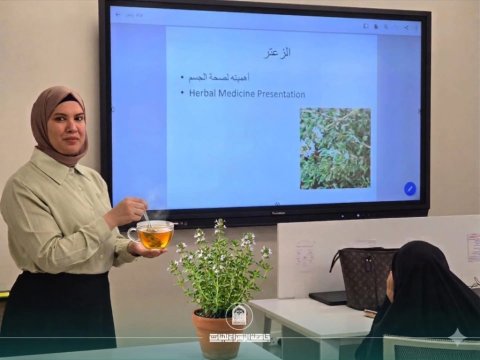
Thyme: A Natural Treasure for Enhancing Overall Health
As part of the scientific activities of the Department of Clinical Nutrition at the College of Health and Medical Technologies at Al-Zahraa University for Women, Assistant Lecturer Maymouna Abdullah Khalifa delivered an educational session titled “The Health B...
 College News
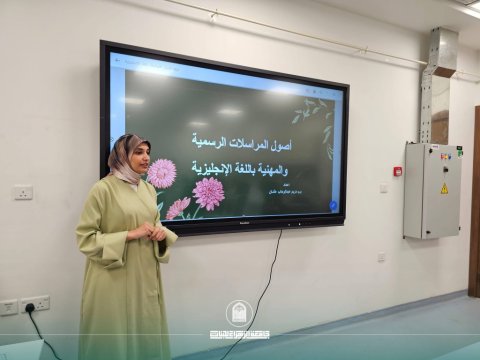
Specialized Workshop on Professional and Official English Correspondence to Enhance Students’ Competence
As part of its ongoing efforts to advance the academic and professional standards of its students, the Department of Clinical Nutrition at the College of Health and Medical Technologies at Al-Zahraa University for Women organized a specialized workshop titled...